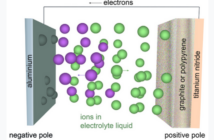
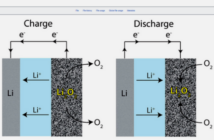
In the recent years, scientists have been keen on discovering new ways of improving the performance of batteries. From lithium-ion batteries using liquid electrolytes, then come the Li-On polymer batteries using gel electrolytes. The innovation keeps on going until the development of thinner and lighter thin-film Li-On batteries changes how a lot of things work. In this post, we will establish the connection between Polymer Technology, Nanotechnology and Thin-film Li-On batteries.
In the previous post, we discussed the technology behind thin-film batteries. We mentioned thin-film printing technology wherein the step-by-step printing of film layers in producing the battery is known as “deposition”. A process known as Magnetron Sputtering deposits the solid-polymer electrolytes over the cathode material. These processes actually branch out from the technologies known as Nanotechnology and Polymer Technology. Here is how these technologies work in relation to the battery manufacturing process.
Nanotechnology
Nanotechnology is defined as the manipulation of matter on atomic and molecular scale with at least one dimension sized from 1 to 100 nanometers. By reducing the size of the electrodes, electrolyte and other materials, “nanobatteries” are produced. Reducing the size of materials used in batteries gives benefits such as increased available power and reduced recharging time. This is the role of nanotechnology in the manufacture of batteries.

Nanotech Rechargeable Battery
Image Source: Space Daily Website
Polymer Technology
Polymer Technology, also known as “polymer engineering”, is a field of engineering that focuses on the design, analyses and modification of polymer (large, often synthetic, molecule) materials. In the post about Lithium-ion polymer battery, we learned that the electrolyte used in such battery is solid-polymer such as polyethylene oxide or polyacrylonitrile. It was also mentioned that this electrolyte is a plastic-like film.
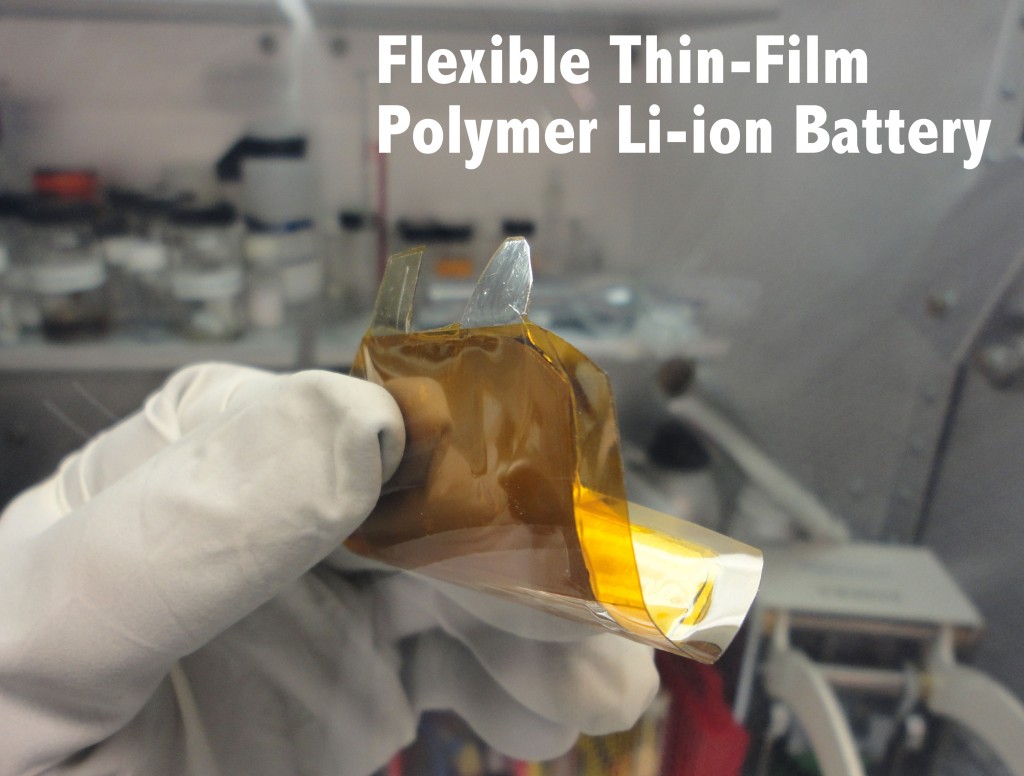
Flexible Thin-Film Polymet Li-ion Battery
Image Source: Daily Tech Website
It is referred to as lithium polymer technology, a challenging assignment for most battery manufacturers in improving the design of solid-polymer based electrodes and electrolytes. Depending on the commercial application, manufacturers use solid-polymers like metallic lithium negative electrode, plastic conducting carbon-sulfur positive electrode, and positive electrode consisting of organic sulfur-containing compounds in combination with polyaniline.
Combination of Nanotechnology and Polymer Technology
In 2011, a polymer gel was developed at the University of Leeds. This is a promising breakthrough in both polymer technology and nanotechnology since they used a new manufacturing process called extrusion/lamination. In this process, the gel is sandwiched between an anode and cathode at high speed to create a highly-conductive strip that is just nanometres thick. The resultant product is a polymer gel film (mix of solid-polymer and liquid electrolyte) that is safe, damage tolerant, and can be shaped and bent to fit the geometries of virtually any device.
Today, nanobatteries like the thin-film Li-On battery are widely used in consumer electronics and medical devices. The flexibility in the size and shape of this battery makes it even more convenient for use in many other commercial, industrial and military applications. With the continuous research in the field of nanotechnology and polymer technology, the opportunities in the usage and application of thin-film batteries are endless.
Related articles:
What is a Lithium-ion Polymer Battery?