We wrote yesterday about flow batteries. And how a professor hopes to use them to realize his dream of universal electric vehicles. Today, we thought it would be interesting to research the history of flow batteries. We found to our surprise the design dates back to 1884. That was when a French engineer decided to power an airship with an electric propeller.
The Incredible, Mighty Airship Called La France

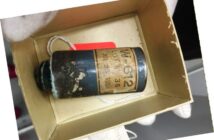
La France was a 170-foot long, 66,000-cubic-foot monster by the standards of the day. It cruised for 8 kilometers in 23 minutes on the power of a 998-pound flow battery, in 1884.
We looked for evidence, and found the remains of the original hangar at Chalais Meudon, in the southwestern district of Paris, France.
La France was the brainchild of Charles Renard – who invented flow batteries for the purpose – and his colleague Arthur Krebs. They borrowed an army airship for the experiment and made seven flights. Five of these flights returned under their own zinc-chlorine flow battery power. However, history is silent on what the exasperated generals said.
Flow Batteries Return to Life in the Mid-20th Century
In 1954, 70 years later, a German scientist (of unknown name to us) patented a procedure for storing electrical energy in liquid. This time the base materials were titanium-chlorine, and hydrochloric acid. Then NASA picked up the ball 19 years further on in 1973. They produced the first iron-and-chromium redox flow battery to store energy at a future moon base.
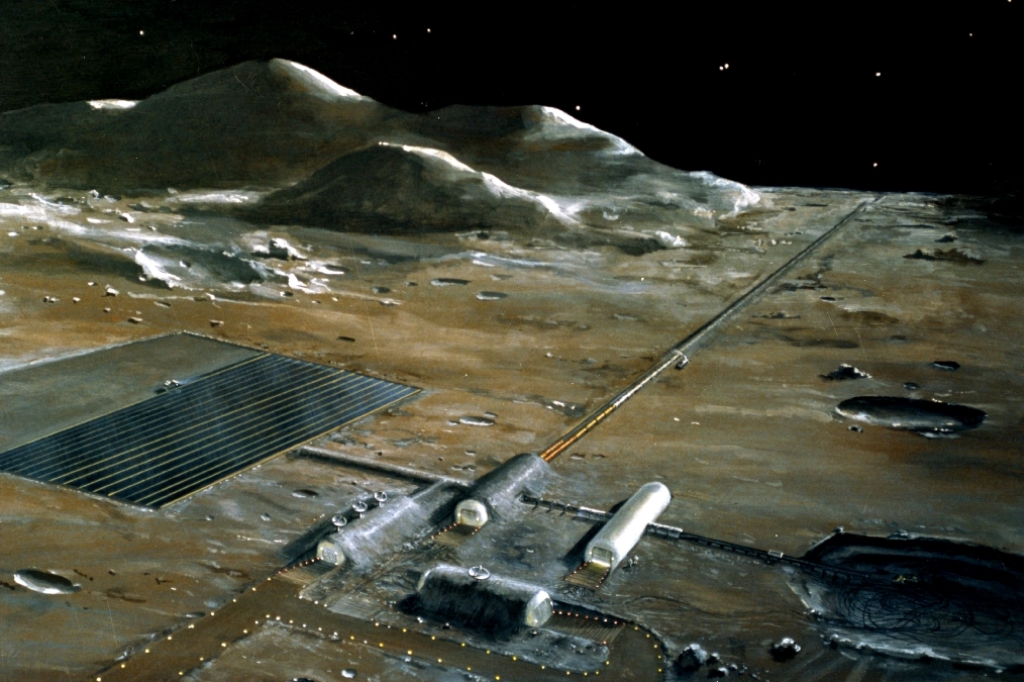
The moon base never happened because the target shifted to Mars. Commercial research continued into uranium, and zinc-bromine flow batteries. But these were too hazardous for consumers to use.
In 1984, the University of New South Wales, Australia built a prototype vanadium redox flow-battery. This was the first time there was the same chemical on either side of a flow battery membrane. Scientists are hoping flow batteries hold the key to replacing coal and nuclear power stations with wind and sunshine.
Flow batteries have potential to respond in milliseconds, and deliver electricity for hours. We have a lot to thank two gentlemen who wanted to fly the world’s first fully controllable airship. Imagine what they would say about how we benefit from their experiment.
Related
Instant Battery Charges, A Bright Idea
Accumulators, Capacitors and Airships
Preview Image: Divided Zinc-Cerium Redox Flow Battery