‘Science’ is a systematic approach for establishing, and testing knowledge about the universal world around us. ‘Experiments’ are ways to prove, or disprove assumptions so we can add them to this body of knowledge. To complete this assignment for monitoring batteries you are going to need:
- A few unused AA and nine-volt batteries from different brands
- A multi meter for monitoring batteries within defined ranges
- A notebook and pen to record readings for a report you will write
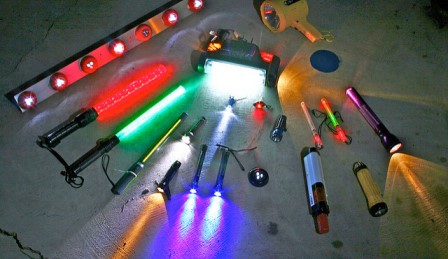
- Devices for single batteries you can leave running continuously
DO NOT USE lead-acid, laptop, smartphone or other kinds of batteries for this experiment. Ask an adult or battery buddy for advice, if you are unsure what AA and nine-volt batteries are.
Basic Research before Monitoring Batteries for Run Times

Put uniquely numbered sticky labels on the battery cases. Then cross-reference these in your notebook against battery brand, type, and voltage. Touch the negative and positive multi meter probes to each battery’s respective terminals and read their DC voltage.
Record this in your notebook as ‘start readings’. If the multi meter needle hardly flickers when monitoring batteries, adjust the voltage range to get a readable result.
Now Proceed to Discover Batteries with Best Run Times
Take one AA battery and one nine-volt battery at random and place them in their respective devices. Switch these on, and immediately record the ‘start times’ in your notebook. Test for the remaining battery voltage every half hour and write this up too. If your device uses two or more batteries in series, measure the voltage across the set.
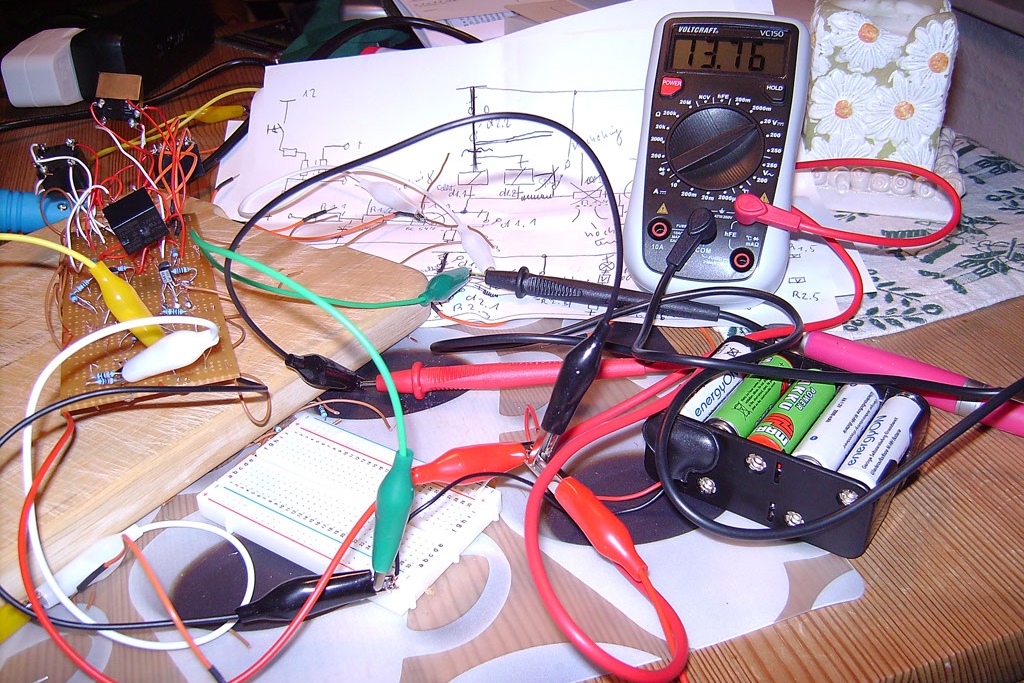
Remain present when the device starts working at a lower rate. When it stops completely, note the time and the cut-off voltage of the battery.
Create a spreadsheet and line graph to compare voltage results over time. Try your best to measure battery voltages while your devices are running, if you can.
Continue with the remaining batteries in the same devices. If a device design prevents you from monitoring batteries on line, restart the device immediately afterwards before the batteries start to recover. How did your findings vary from your assumptions before the experiment? What did you learn from this research?
Related
How to Use a Multi Meter to Measure Electricity
How to Calculate Battery Capacity
Preview Image: Our Lights