Fractures in an unpredictable cobalt supply chain could disrupt the battery industry, according to researchers at Chinese Academy of Scientists. They published a detailed report that we link to below, that contains convincing data.
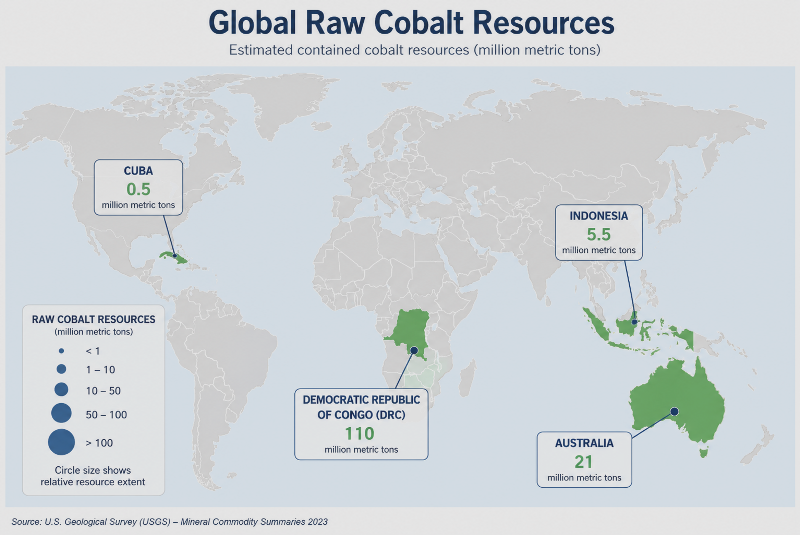
Most cobalt reserves are in a handful of countries. Democratic Republic of Congo holds almost two-thirds, followed by Australia, Indonesia and Cuba. These reserves have become increasingly important for battery manufacturers.
Cobalt Supply and Battery Manufacture
Cobalt plays an important role in many types of rechargeable lithium-ion batteries. It is commonly used in the battery’s positive cathode that stores and releases energy.
This cobalt helps improve battery stability, safety, and lifespan, allowing batteries to operate reliably through many charging cycles. However, supply is never guaranteed, because the potential for fractures in the cobalt supply chain is always there.
Cobalt also supports higher energy density, meaning batteries can store more power in a smaller space. This has made cobalt valuable for electric vehicles, smartphones, laptops, and energy storage systems.
Why the Risk Of Supply Chain Fractures?
The report by the Chinese scientists we referred to earlier, details how they traced the metal traveling through 230 nations. They noted how the risk compounded as it passed through refining and manufacturing phases.
Disruptions, when they do occur, cascade vertically and horizontally producing instant supply failures. Unstable nations playing important roles are particularly vulnerable to these events, and lack resilience to recover quickly.
Therefore, the researchers observe, the world needs international, multi-national collaboration to avoid, or tackle fractures in the cobalt supply chain. States need to pull together to protect this critical resource.
Recent military interventions have highlighted how a single supply route like the Strait of Hormuz, holds the keys to a vital energy resource – oil in this case. Could cobalt become a geopolitical flash point? We hope not!
More Information
Recovering Cobalt and Nickel Selectively