The possibility of magnesium batteries has tantalized scientists for over a decade. Because magnesium has greater energy density than lithium, and could therefore form more powerful batteries. Researchers have been stymied by the lack of a suitable liquid electrolyte that would not react corrosively with other materials. Now researchers at Berkeley and Argonne think they have the answer: A solid electrolyte that magnesium ions can pass through at great speed.
Why the Speed Magnesium Ions Travel Is So Important

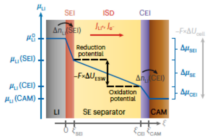
Electrolyte is the bridge that keeps electrodes separate so they do not short circuit. At the same time, it provides a shuttle service so ions can travel between them during charging and discharging.
If we could speed up these two processes, we would come closer to the super-efficient batteries grid storage and electric vehicles demand.
The researchers came up with a solid electrolyte with the tongue-twister name of magnesium-scandium-selenide-spinel. What’s more important it is transmits magnesium ions with a speed equivalent to lithium solid electrolyte. Therefore, it promises a denser battery with performance exceeding lithium.
As Might Be Expected There is More Work to Do

“This probably has a long way to go before you can make a battery out of it, but it’s the first demonstration you can make solid-state materials with really good magnesium mobility through it,” a Berkley scientist explains.
However, they have proof of magnesium ions dancing through solid electrolyte at the cutting edge of science.
The Argonne and Berkeley researchers used magnetic resonance imaging to confirm the speed at which the magnesium ions traveled. Medical scientists originally developed the technique to observe hydrogen atoms of water in human fatty tissue, muscles, nerves, and other biological materials.
We find the way technology is joining up this way quite fascinating. Do you think knowledge and truth represent a giant jigsaw puzzle and we are beginning to find the pieces? The components of this experimental magnesium battery certainly do fit well together. We would love to know what you think.
Related
Scientists Develop New Electrolyte for a Magnesium-Sulfur Battery
Magnesium-Ion Batteries: One Step Up From The Li-Ion Technology
Preview Image: Magnesium in Periodic Table