

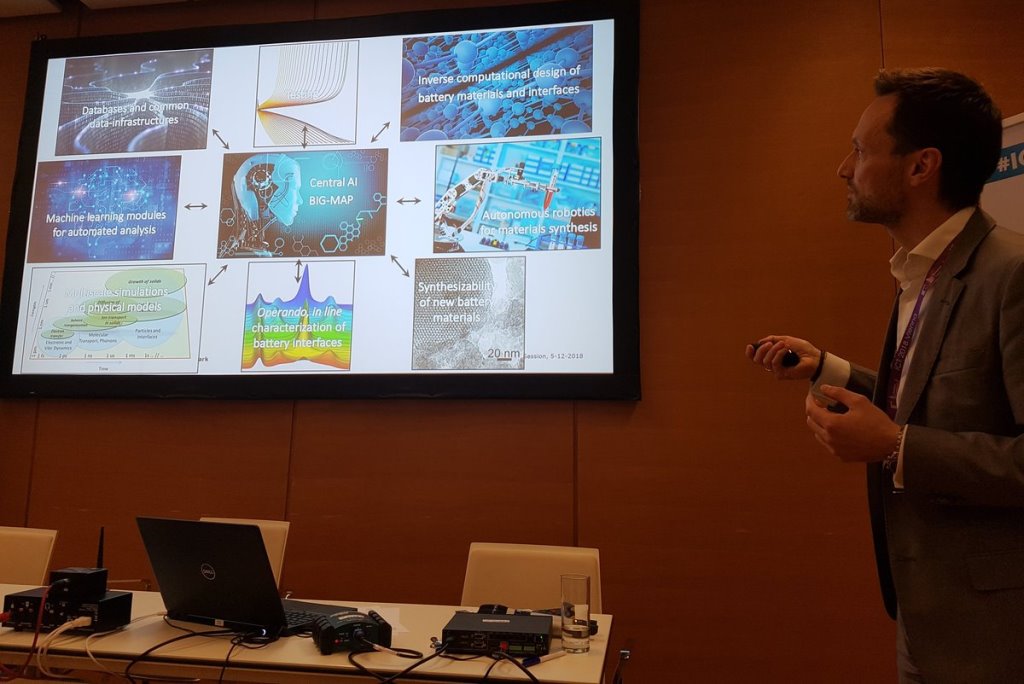
The European Union is a leader in green energy, and therefore determined to secure an independent battery supply. However it will need significant EU muscles to outwit China commercially. Hence it launched its Battery 2030+ program this month. This project will focus on a TRL technology readiness level 3, says Green Car Congress.
How TRL 3 Will Grow EU Muscles for the Future

Technology readiness levels (TRL) peg maturity on a scale from basic research through to system test, launch, and operations. Thus Level 3 involves research to prove feasibility. After that, the European Battery Alliance will take promising ideas to market.
This alliance building EU muscles for future battery independence embraces the best of European Union research hubs. Professor of Inorganic Chemistry at Uppsala University Sweden Kristina Edström is coordinating the project. She says “We will establish a platform to more rapidly detect new battery materials by means of machine learning and artificial intelligence. Moreover, we will play particular attention to sustainability.”
EU Muscles Developing in Four Distinct Battery Areas

Accelerated discovery of battery material and interfaces spearhead the four main research areas. Thereafter, smart sensing and self-healing functionalities will focus on ability to manufacture and recycle.
The research model will be chemistry-neutral, in that the results may apply to any battery type. Moreover, the research will include battery management protocols, hardware, and software in the value chain. “We are particularly interested in the interfaces in batteries. Those places where reactions take place that adversely affect the battery’s service life,” Kristina Edström adds.
We are excited about Europe’s plan to build battery muscles into their economy. The sub-continent was at the forefront of early automotive development. We are fascinated to learn what value it will add to next gen electric automotive development.
Related
We Can Make Better Batteries, EU Argues
European Union Steals a March with Storage
Preview Image: Battery 2030+ Presentation


