Researcher Bin Liu and his team from Pacific Northwest National Laboratory in Richland, Washington appear to have made a breakthrough. They say they have found a way for lithium-ion batteries to perform well from −40 to +60 °C. Their new lithium electrolyte contains multiple additives to enable this. If this comes to market then this could be an occasion to remember.
What We Know So Far About This New Lithium Electrolyte

The Pacific Northwest scientists say their lithium electrolyte displays “significantly enhanced discharging performance at −40 C”. Moreover, long-term recycling is stable at +25 °C with more than 85% of capacity retention after 1000 cycles. Furthermore, cycling stability is “obviously improved” at +60 °C too.
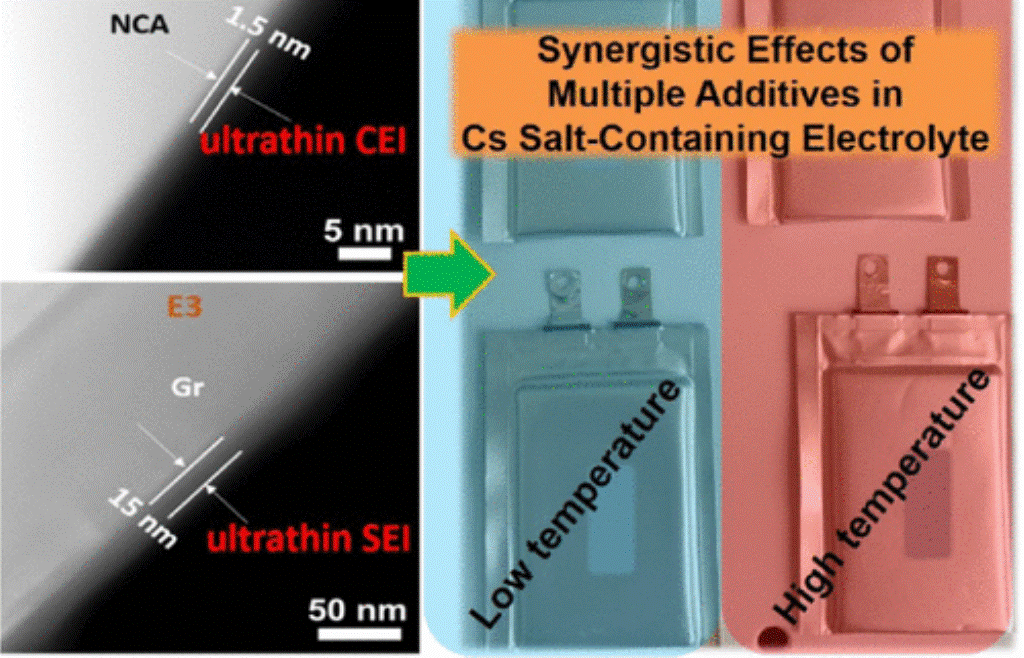
The scientists ascribe their success to “highly conductive, uniform, and compact passivating films formed on both anode and cathode surfaces”. They achieved this “by the synergistic effects of the multiple additives.” They filed their report with ACS Publications under “Constructing Robust Electrode/Electrolyte Interphases to Enable Wide Temperature Applications of Lithium-Ion Batteries”.
Practical Applications in the Electric Auto Market
Lithium-ion batteries in EV’s do not perform well outside normal temperature range for humans. During the polar vortex freeze, electric cars lost part of their driving range although they recovered this when temperatures warmed again. However, the biggest problem has been permanently reduced battery life at prolonged high temperatures.
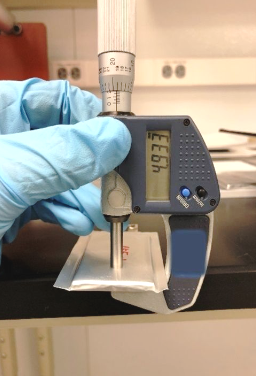
This breaking success did not materialize without considerable patience. The team from Pacific Northwest National Laboratory in Richland, Washington assessed the performance of lithium-ion batteries using five different electrolytes. Then they added their ‘secret blend’ of three compounds to the lithium electrolyte they preferred most.
The result was “the formation of highly conductive, uniform and robust protective layers on both the anode and the cathode.” May we add “keep up the good work at Pacific Northwest National Laboratory in Richland, Washington”.
Related
Freezing Winter Damping Down Electric Cars
EV Battery Performance Role of Temperature
Preview Image: Synergistic Effects of Multiple Additives