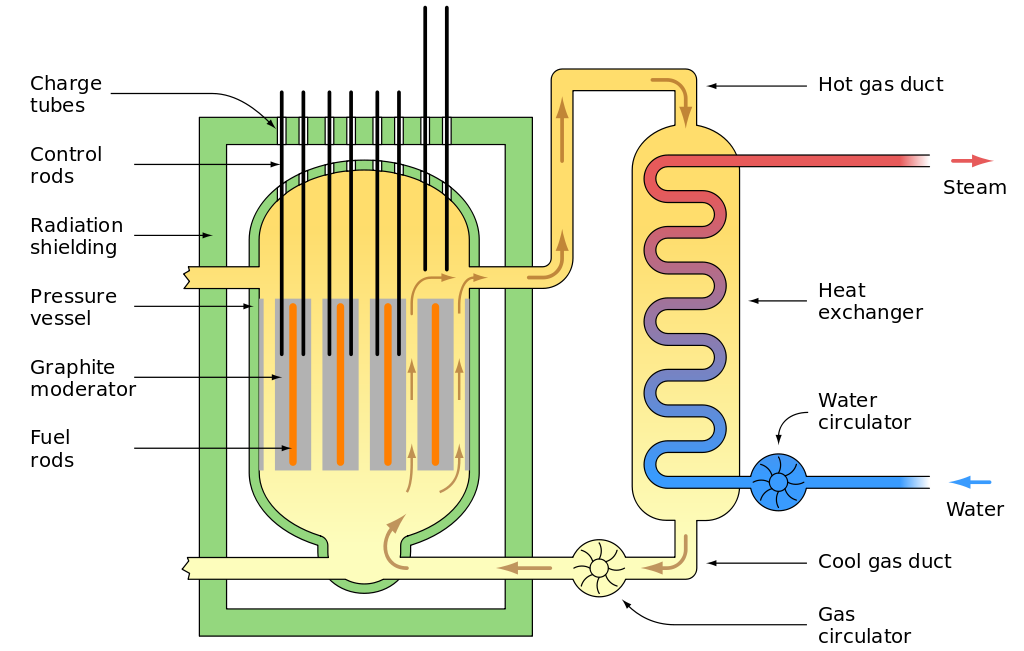
When they built Berkeley nuclear power plant in the heart of England in the 1950’s, they used graphite as moderator. The twin ‘magnox’ reactors generated enough electricity for a medium-sized city at that time. Nobody spared a thought about recycling nuclear garbage later. Perhaps they more interested in the plutonium-239 by-product for making nuclear weapons during the Cold War.
The Deferred Task of Recycling Nuclear Garbage
The UK government shut down the nuclear power plant in 1989 after 27 years of service. However, they could not move in right away and recycle the materials. That was because the ‘hot’ side of the plant was still lethally radioactive (unlike solar panels and wind turbines).
Engineers gingerly removed the fuel in 1992 and carted it away to bury deep underground. They demolished the turbine hall two years later, followed by the spent fuel cooling ponds in 2001. After that the site fell silent for thirty years after decommissioning, which is where we are now. The next phase of recycling nuclear garbage at Berkeley has begun and there are renewable possibilities.
Direct Electricity Generation from Nuclear Batteries
A Pile of Challenges Hidden In the Berkeley Basement
Nuclear power stations generate a huge amount of nuclear waste. If an overall or a cloth becomes radioactive, they seal it in a container. Nowadays they bury these containers at disposal sites. However, in the case of Berkeley they left their nuclear trash in concrete vaults 26 feet underground according to BBC Somerset.
Their newshound reports technologists are using a computer controlled robotic arm to scoop up the nuclear garbage in 220lb loads. This will go to an ‘intermediate storage facility’ until somebody has a better idea. However, the bigger challenge is what to do with the graphite moderating blocks when the time comes.
This may finally see commercial implementation of the Bristol University proposal in the video. Recycling radioactive graphite into wafer-thin radioactive diamonds would be a slight start to the process. However, recycling the 95,000 tons of radioactive graphite in the UK will need more than that.
Related
Tiny Diamond Batteries from Nuclear Waste
Returning a Nuclear Disaster to Slightly Greener Fields
Preview Image: Schematic of Magnox Nuclear Reactor
Video Share Link: https://youtu.be/b6ME88nMnYE