

If we looked inside an aqueous lithium battery, we would find an anode and a cathode electrode, with a liquid electrolyte between them. This electrolyte shuttles ions between the electrodes as the battery charges and discharges. However there are unresolved problems with maintaining battery performance. Now, researchers at the Rensselaer Polytechnic Institute in Troy, New York have produced an improved aqueous lithium-ion battery.
Why We Need an Improved Aqueous Lithium-Ion Battery Now
We are increasingly reliant on lithium-ion technology for consumer and storage batteries. However to date, developing alternatives has been a slow, laborious process. Moreover, increasing pressure for higher performance is pushing the technology to its limits.
The improved aqueous lithium-ion battery from Rensselaer Polytechnic Institute in Troy holds promise of a safer, cost-efficient solution. One that will use non-flammable aqueous electrolyte instead of a typical organic one. Design News says this novel approach involves a water-in salt electrolyte that is less likely to electrolyze. This is a process whereby too much voltage would otherwise causes the water to decompose into hydrogen and oxygen.
Novel Materials for the New Electrodes Too
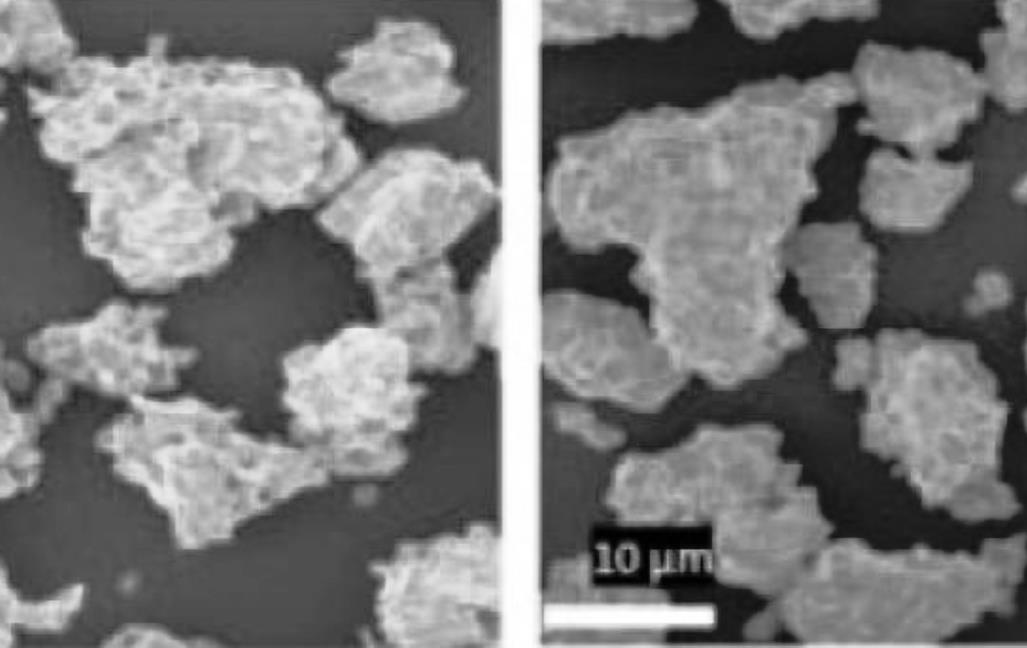
The research team also took a novel approach with the electrodes. That’s because they used lithium-manganese oxide for the cathode, and niobium-tungsten-oxide for the anode. The latter is a new innovation.
They report ‘outstanding density’ in the niobium-tungsten-oxide anode. Moreover, the electrode also accepts fast charging owing to ‘ultra-fast diffusion of lithium’ via tunnels in the oxide structure. Fast charging combined with high density are rare in aqueous batteries. The research team says their improved aqueous lithium-ion battery holds promise everywhere cells must fit into tight spaces.
Therefore, we hope to see their innovation appearing in smart phones, laptop computers, and local grid storage. Perhaps we may see their aqueous batteries appear in electric vehicles someday.
Related
Adding Salt to Lithium Metal Electrolyte
New Lithium Electrolyte Extends Temperature
Preview Image: Niobium Tungsten Oxide Particles
Video Share Link: https://youtu.be/E-OvK_sgoOE


