

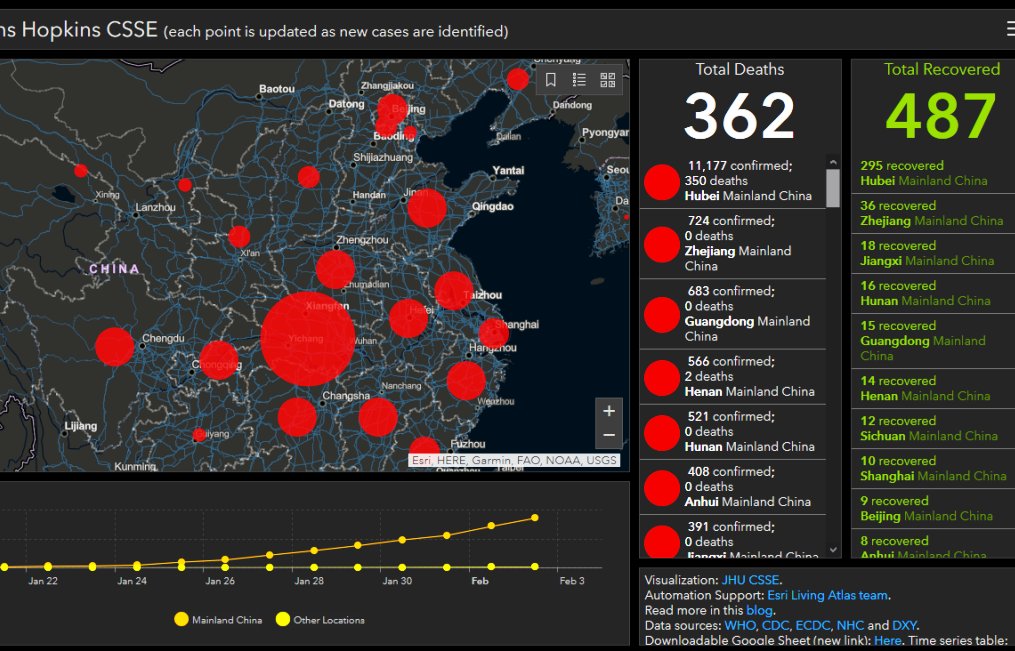
At the time of writing we still don’t know exactly how the 2019-nCoV virus is spreading. Therefore, until we have better information we have to work within the paradigm of other corona viruses. This is not ideal but we must go on what we have. We hope it is not too long before we understand exactly how the corona virus is spreading.
The CDC Take on How the Corona Virus is Spreading
Centers for Disease Control and Prevention says corona viruses are common in animals, including camels, cattle, cats, and bats. However, they do occasionally jump across to humans and can rapidly replicate themselves.
Corona viruses mostly spread through a population via respiratory droplets. These are what we inadvertently exhale when we cough or sneeze. Cross-infection occurs when the droplets land on our noses or mouths, from where we may inhale them into our lungs. In other words, the same way we catch another person’s cold. There’s also a possibility we could catch the condition from a droplet after it settled on a surface.
However, the Severity of the Virus Varies
We may have an idea how the corona virus is spreading, but we can only judge the rate of this by confirmed diagnoses. A healthy person may have the illness, think they have a mild cold and not report it. However a person who is ill has weaker defenses, and may become extremely ill.
Moreover, some viruses like measles are more contagious than others. There is little space for modesty in this time of uncertainty. We need to keep six feet away from other people if possible, and wear a mask covering our noses and mouths in busy areas. We also need to be aware the droplets can be on door handles, hand rails, food in shops, and in public transport.
Therefore we need to do more than just wear a face mask. We must sanitize our hands regularly, and stop touching our noses and mouths with them.
Related
Coronavirus Epidemic, Humidity and Temperature
Batteries Helping Counter Coronavirus in China
Preview Image: Graphic by John Hopkins University
Centers for Disease Control and Prevention Report


