The National Institutes of Health NIH is America’s primary agency for biomedical and public health research. It owes its name to originally being a loose network of hospitals. Nowadays, it has more than 20,000 employees including over 6,000 research scientists. When A.I. eyes COVID at National Institutes of Health in Bethesda, Maryland this way, we can expect to see a few stones overturned.
National Institutes of Health Eyes A.I. for COVID Diagnosis
There’s a heap of research into the deadly infectious disease piling up. Much of this occurred independently and it’s just too much for the human brain to assimilate. However, artificial intelligence can make up for that with super computers invented by humans. National Institutes of Health plans to eye COVID with A.I. and punch through into solutions.
The NIH National Institute of Biomedical Imaging and Bio-Engineering NIBIB released information on August 5, 2020. It announced it will create new tools to assist physicians detect, and tailor-make treatment therapies for COVID-19. This will be a multi-institutional collaboration harnessing A.I. and medical imaging.
Exciting New Ways for Artificial Intelligence to Fast Track Results
The NIBIB-lead team believes a large database of COVID-19 chest images will help physicians treat coronavirus disease. Moreover, those signatures would enable health workers assess severity faster, and choose between alternative treatment options sooner.
Our method will gather together a large storehouse of COVID-19 chest images, says program leader Guoying Liu. Researchers can then use these to evaluate lung and cardiac data, ask critical questions, and develop predictive images.
Our program to apply A.I. to COVID at National Institutes of Health is particularly exciting, enthuses NIBIB director Bruce Tromberg. That’s because it unites leaders in medical imaging and artificial intelligence. And this time they are from academia, professional societies, industry, and government agencies.
Related
AI Predicted Respiratory Disease Developing
Six Different Clusters of COVID-19 Symptoms
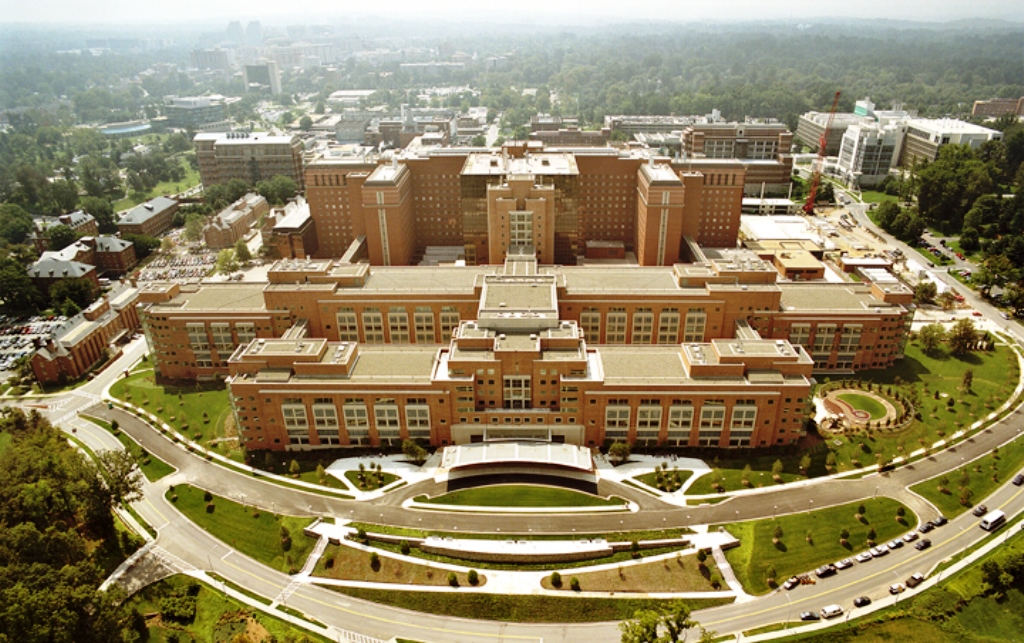
Preview Image: Mark O. Hatfield Clinical Research Center