The coronavirus pandemic impacted on commercial and public transport around the world. Travel for pleasure or for travel’s sake has shrunk away. In cities, many workers walk across their living room to start their working day, if they are fortunate enough to have employment, that is. Today we review how COVID-19 affects the way that we commute.
Could New York City Transport Return to Old Days?
New York Times sent Veronica Penney on a scouting expedition to Main Concourse at Grand Central Terminal the other day. She found commuting numbers still 75% down from the high, and she could stroll through while maintaining a comfortable six-foot social distance.
But was this a good idea she wondered, when the goal was to get people out of automobiles? And persuade them into public transport so the City could become carbon neutral by 2050. Veronica consulted Shams Tarek, deputy communications director at Metropolitan Transportation Authority operating subways, trains and buses.
‘We are still in a severe fiscal crisis caused by the pandemic,’ Shams conceded. ‘But we’re optimistic about the future,’ he added, ‘given the support we’ve received in Washington. We expect ridership to gradually return to the system,’ he closed confidently.
COVID-19 and The Way the Rest of World Commutes
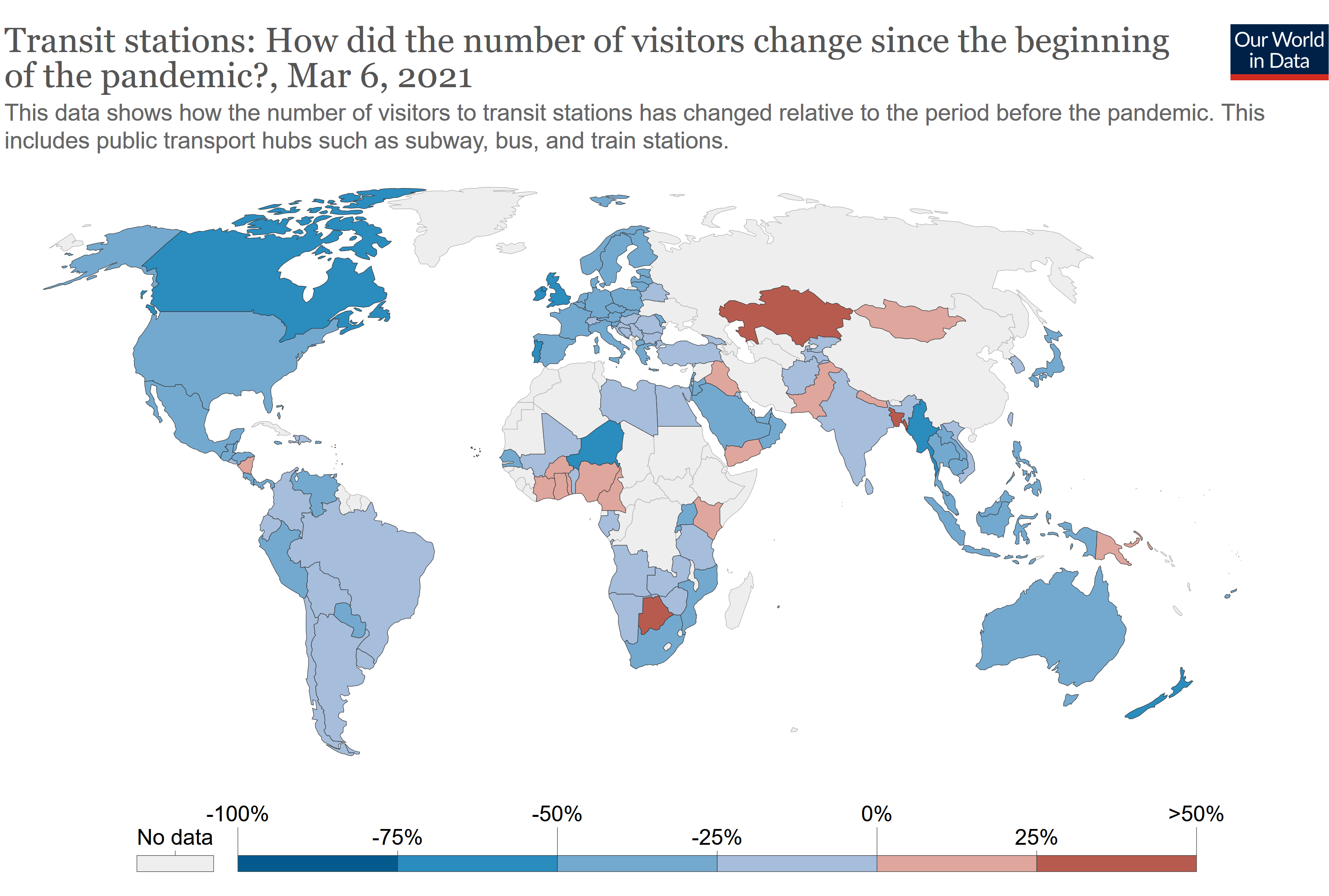
The chart above this post highlights changing consumer patterns at public transport hubs, including subway, train and bus stations. We were curious why Kazakhstan and Mongolia stand out as such exceptions. When most of us appear to be behaving sensibly. It’s a pity we don’t have data for most of Asia though
The tragedy behind these numbers is they don’t just reflect COVID-19, and the way that we commute. They also reflect job losses – and a scramble for food and work in some places. We fear it will take much more than vaccines to get our world back again.
Related
What is a Coronavirus Exactly, Do You Know?
Returning to Work After COVID The Challenge
Preview Image: Visitors to Transit Stations