

It’s nigh impossible to prove something that does not exist, says Eco Health Alliance’s researcher Peter Daszak. He was chatting with Kaiser Family Foundation’s Arthur Allen regarding the theory the coronavirus came from a lab leak at Wuhan Institute of Virology. However, were we to ask him whether a COVID bat did come from a cave, he would have difficulty proving that either.
That’s Because of China’s Lack of Transparency He Claims
The generally accepted theory – according to correspondent Arthur Allen – is the COVID virus arose through natural mutations. And it spread from bats to humans, possibly at a Chinese wet market where caged animals were sold and slaughtered. This is the theory Peter Daszak holds, as opposed to the virus leaking from Wuhan Institute Lab.
However, he is unable to prove the wet market theory either. That’s because of what he calls ‘China’s openness and transparency’. And this applies to a whole range of other issues, including early reporting of the pandemic. ‘People don’t realize how sensitive China is about this,’ he explains. ‘It’s plausible they recognized there were cases coming out of a market, and they shut it down.’
We Can’t Prove a COVID Bat Came From a Cave Either
We can’t prove either of the two theories in the lack of clear, open evidence, if indeed it does exist. Perhaps we should stop wondering whether a COVID bat did come from a cave.
Far too much murky water flowed under the bridge since then, and far too many people died. Surely, there are more important things to do than point fingers. Especially as we can only fully stop the pandemic if we all work in harmony together
Related
Inconclusive World Health Wuhan Report
Was Wuhan Seafood Market the Virus Source?
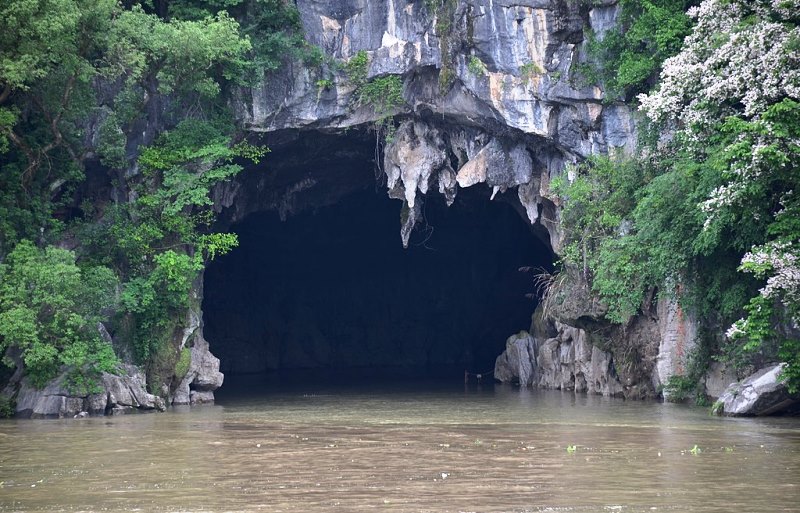
Preview Image: A Cave on China’s Li River


