There were no computers or smart phones at the start of the First Industrial Revolution in the 1830’s. There were not even batteries to ensure they had a store of energy. You had to jump on a horse and ride if you had a message for someone in the next village. Sounds unbelievable! When did lead-acid battery history begin, that ensured progress in so many ways?
Lead Acid Batteries Were the Mother of Storage, But Not the Source
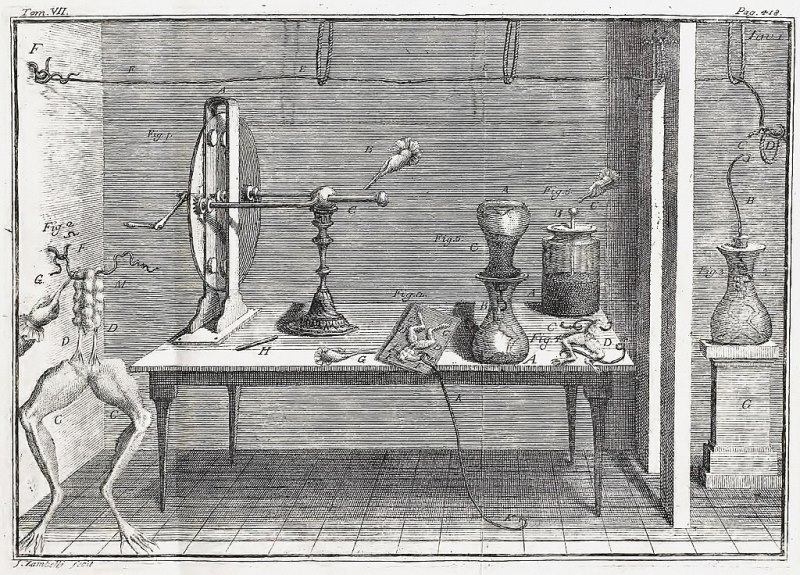
Luigi Galvani discovered ‘animal electricity’ when he stimulated the leg of a dead frog with static electricity in 1791. And the frog leg twitched, possibly to his surprise. However, the Italian physician, physicist, biologist and philosopher did not take the matter further. Although his friend, and fellow scientist Allessandro Volta did.
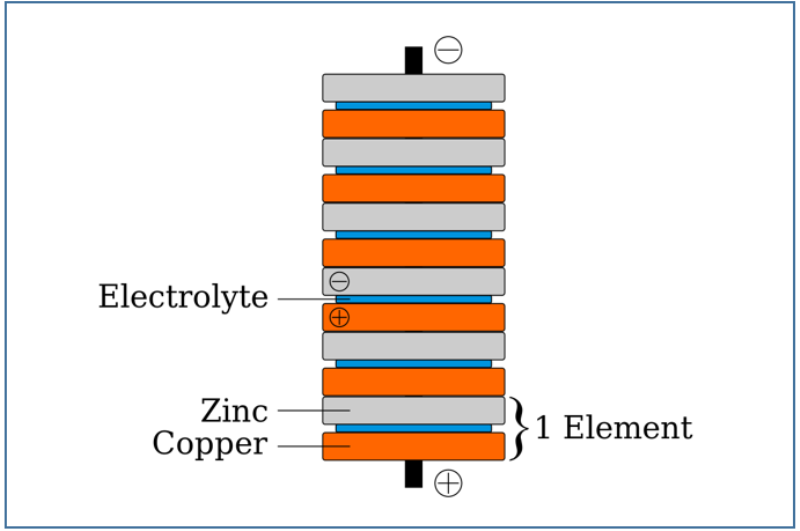
Allessandro believed he could generate electricity by pairing two different metals, separated by something moist. This was after he learned Galvani used two different metals in his experiment, with the dead frog effectively providing the moisture separator. And so he built a pile of zinc alternating with copper discs, separated by brine-soaked cardboard. And this produced the electric current he expected.

This Simple ‘Voltaic Pile’ Was the Start of Lead-Acid Battery History
Allessandro Volta’s experiment contained all the elements of a lead-acid battery connected in series. The alternating metals in his voltaic batteries were pairs of electrodes, while the brine-soaked cardboard was the electrolyte. He reported his findings in 1799 and this inspired many other innovations.
However, Allessandro will always be remembered as the father of batteries. In 1873, British Association for the Advancement of Science named volts, ohms, and farads after the visionaries who discovered them. We’ll be back with the next chapter in lead-acid battery history soon.
Recent Posts
Build a Simple Lead Acid Battery at Home
Lead Batteries Are Most Recycled US Product
Preview Image: Structure of a Voltaic Pile