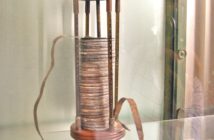
This article describes how to build a simple lead acid battery at home. What follows is just an overview and a related video. Please visit the link to DIY FAQ at the end of this post for more info. We’d particularly like to welcome you warmly if you are a kid, and hope we see you back again soon. But do please ask Mom or Dad over to help you with this project. Because two heads are better than one when it comes to science.
What You Require to Build a Simple Lead Acid Battery
You will need the following for this project:
1… Two watertight plastic containers from Mom’s kitchen.
2… Two pieces of lead roof flashing that lost their shine.
3… Sulfuric acid diluted in water in a 20% / 80% ratio.
4… A battery hydrometer to check the battery solution.
5… Suitable lengths of insulated wire with crocodile clips.
6… Petroleum jelly to insulate the clips from diluted acid spray.
7… Four lumps of moldable plastic to hold the plates in position.
8… Plastic gloves, face protection, ventilated work space.
9… One LED. A suitable multi meter to measure energy flow.
10…Several small batteries to charge up your device.
Ensure You Are Working in Ventilated Space Before Proceeding
You must work in ventilated space to disperse fumes when you build this simple lead acid battery at home. Put on your plastic gloves and face protection first. Then attach two suitable size lead sheets to the inside of one of the plastic containers.
Those sheets should be a ½ inch above the base, and extend above the rim to attach crocodile clips. Insulate he clips with petroleum jelly after you attach them. Now slowly add the sulfuric acid to the water in the other plastic container, until the hydrometer reads ‘healthy’.
Then slowly decant sufficient solution into the other container (with the plates) until this is ½ inch below the rim. Finally charge you device with the small batteries until the multi meter gives a settled reading between the plates.
Have someone hold the container steady while you do so. Wash your hands thoroughly if you feel a burning sensation. DIY FAQ recommends adding more acid gradually if your multi meter reading drops. You can now invite your family and friends to see your LED light up. But please do remember electricity is not a toy!
Recent Posts
Lead Acid Battery Chemistry Simplified for You
Lead-Acid Batteries’ Role in Data Centers
Preview Image: https://youtu.be/msb_BKzTwWU
Read This First: Detailed Advice from DIY FAQ Website