

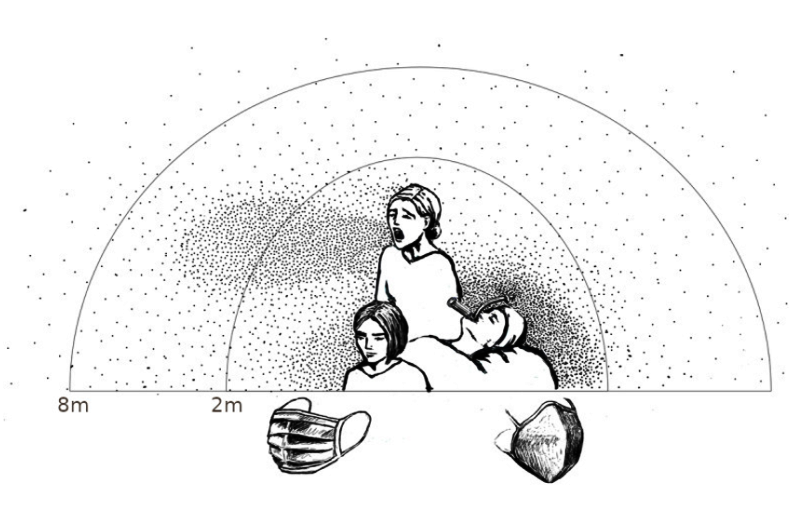
Direct person-to-person coronavirus transmission is the primary means by which the disease spreads. Wolters Kluwer, solutions provider confirms this occurs mostly within a range of approximately six feet. The virus travels in drops of moisture infected people release. This commonly occurs when they cough, sneeze or talk. However, another person must be in a position to receive the infection.
Ways in Which the Coronavirus Enters a New Host
Person-to-person coronavirus transmission occurs when the invader enters the host’s mucous membranes. These are moist inner linings of certain body cavities and organs, including nose, mouth, lungs, and stomach.
1… The primary route is via the host’s respiratory system, which exchanges oxygen and carbon dioxide through breathing.
2… However, an infection may also occur if the host’s hand or forearm becomes contaminated, and they touch their eye, nose, or mouth.
3… The coronavirus may also remain airborne and travel further, as cigarette smoke does especially in poorly-ventilated areas.
The Infectious Life Cycle of the Coronavirus
An infected person is most likely to transmit the virus to a new host during the early stages of the infection. Some studies suggest this peaks around the fifth day. This risk then gradually reduces until it is unlikely after seven to ten days. These are average times but there are exceptions.
Reducing Person-to-Person Coronavirus Transmission
There are two broad ways to reduce coronavirus spread, given that hand to face transmission appears to be rare. This first strategy is user driven, whereby people avoid close contact and cover their noses and mouths. However, there is also a second, passive strategy that disperses the virus through ventilation.
The risk of transmission depends on the type and duration of the contact, which in turn influences the quantity of the virus received. Prolonged contact in an indoor setting appears to be the most risky situation. This is why it is so important to shelter if we have an infection, and keep our distance from our co-workers and households.
Breaking News
Electrostatic Charged Face Mask Hygiene


