In December 1840 English physicist, mathematician, and brewer of beer James Joule reported a new discovery to British Royal Society. He had found it was possible to generate heat, by passing an electric current through a material. Nowadays we use joule heating every time we boil water in an electric kettle. But now scientists have found a way to speed recycling by joule heating battery waste too.
Removing the Inert Layer by Joule Heating Battery Waste
The scientists are members of a team at Rice University, Houston, Texas under leadership of James Tour. They developed a new procedure for recycling scarce materials from spent battery ‘black mass’ by passing electric current through it. This removes the inert layer between these materials, reduces their oxidation, and renders them suitable for dissolving in a weak solution of acid.
This new method enabled the team to extract 98% of rare material from mixed battery waste, according to AZO Clean Tech. The university press release – see link below – confirms that joule heating battery waste enabled them to bring cathode and anode residue “to temperatures above 2,100 degrees kelvin thermodynamic temperature in seconds”.
“We developed a high-yield, low-cost method of reclaiming metals directly from ‘black mass’,” explains graduate student Jinhang Chen. “This significantly reduces the environmental footprint of spent battery processing.” Chen is a Rice chemistry graduate student, and co-lead author.
Why This New Discovery is Important
There is considerable pressure to recycle scarce materials in spent batteries. Progress has been made in reducing these to a ‘black mass’ powder. The Rice University method improves the process of separating out individual metals as follows:
- It reduces the recycling time by almost 100-fold.
- It significantly trims secondary waste streams.
“What we found is that if you ‘flash’ the black mass,” the team member explains. “Then you can easily separate out the critical metals using only low-concentration hydrochloric acid. You could say the flash liberates the metals, so they dissolve easier. We’re still using acid, but much less. That’s why the economics is so much better.”
More Information
Battery Recycling Demand Soars as Prices Fall
How Lead-Acid Battery Recycling Succeeds
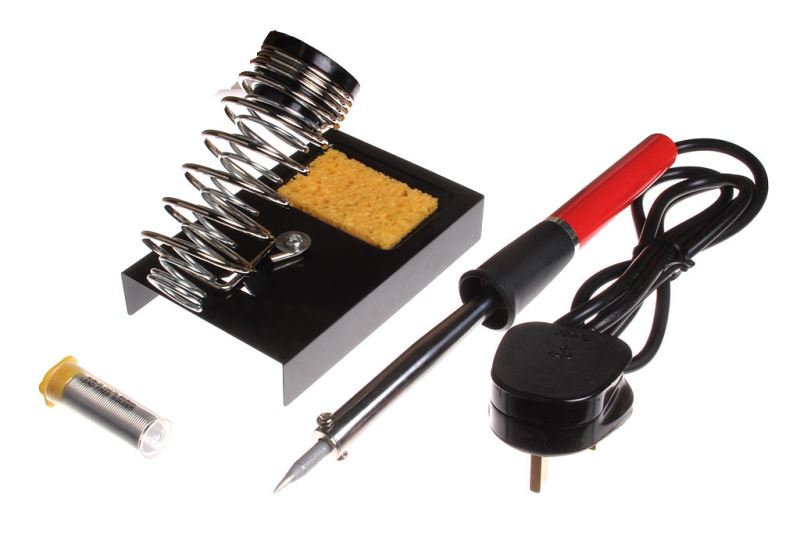
Preview Image: An Electric Soldering Iron