


Researchers at University of Illinois Grainger College of Engineering, have found a way to forecast operational aircraft battery life. This is important as we reach out to carbon-freer flight, which is commercially viable too. The team focused their attention on the rate at which aircraft batteries lose their ability to hold electrical charges. Their model included four different aircraft types, in realistic urban metro scenarios.
How the Team Measured Operational Aircraft Battery Life
Their summary research report below, describes them plotting time-dependent aircraft performance across an operational lifetime diagram. They did so on simulated commuter routes that included residential, and commercial zones in metropolitan areas.
This is the environment in which electric aircraft services are most likely to begin. The operational aircraft battery-life simulations that emerged were insightful, and contained useful practical tips for operators planning to introduce lower carbon electric commuter transport.
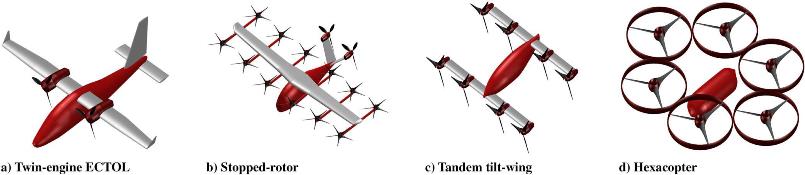
The four passenger aircraft modeled in the study were an electric conventional takeoff and landing aircraft, and three electrical vertical takeoff and landing types. The latter included a stopped rotor aircraft, a tandem tilt-wing aircraft, and a hexacopter aircraft too.
More Noteworthy Findings From the Study
The aircraft each flew eight different simulated flights daily, with stops for simulated battery charging at each destination. The main finding of this study is that “the battery life of achievable missions can fall by as much as 45% within a year”. This could happen during a real time example of their simulation too. Other salient points include:
- Most of the battery degradation occurred during cruising.
- Introducing shorter routes extends older battery lifetimes.
- Cooling system efficacy depends on outside air temperature.
Their project continues with additional research into operational battery performance, and an advanced study of electro-mechanical thermal management systems.
More Information
Viable Electric Airliner on Cards in China
Embraer Electric Air Taxi Could Fly By 2025
Preview Image: Example of an Electric Aircraft


