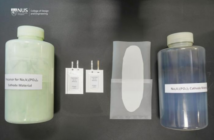
Rechargeable Zinc-Ion batteries, with liquid electrolytes are a promising candidate for bulk energy storage. However, as U.S. Department of Energy’s Office of Scientific and Technical Information cautions, aqueous rechargeable Zn-Ion battery technology is imperfect. Its charge-carrying anodes have poor electrochemical stability, and reversibility during cycling.
Dendrites in Aqueous Rechargeable Zn-Ion Batteries
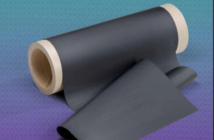
Dendrites growths develop on aqueous rechargeable Zn-Ion battery foils, during routine plating and stripping cycles. These growths are often needle sharp, and may eventually penetrate the electrolyte causing a short circuit and battery failure.
A research report in Wiley Online Library confirms that a dendrite-free zinc anode is the key to avoiding Zinc-Ion battery failure. It concludes that controlling this ‘crystal growth’, will be a deciding factor in the future of high-performing aqueous Zinc-Ion batteries.
The study authors claimed to have suppressed these aqueous dendrites, and to have improved battery runtime forty-fold. However, we found it difficult to follow their logic, due to a flood of scientific terms aimed at an academic audience. Fortunately, we found an easier-to-understand explanation at Mirage News.
A Fresh Approach Improves Zinc-Ion Battery Stability
The article in Mirage News explains how a team at Hefei Institutes of Physical Science of Chinese Academy of Sciences went about this. In headline terms, they added an organic sodium salt to the electrolyte of the Zinc-Ion battery, which inhibited the growth of dendrites.
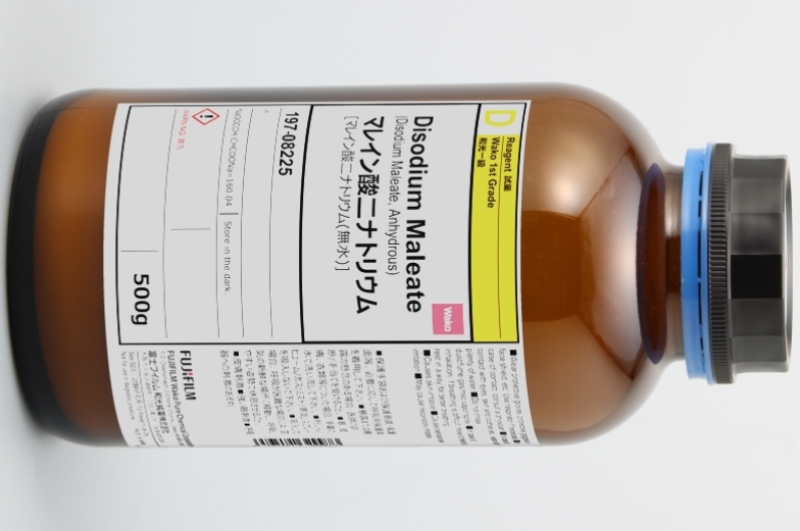
However, the team did not have to develop their disodium maleate from scratch. That’s because sodium maleate is already in use as a flavoring agent, tasting like table salt according to Wikipedia. While the disodium maleate version is present in some household cleaning products, and available from Fuji Films.
“When we tested the Zinc-Ion battery, it was able to work for over 3,200 hours, even when used at high power levels,” a team member announced. Mirage News adds the new prototype has an average coulombic efficiency of 99.81% after 3,000 cycles. And retains 92% capacity after 10,000 cycles as well, while remaining stable throughout.
More Information
3-D Exposes Dendrites Forming in Batteries
Could Zinc-Air Batteries Beat Lithium-Ion?
Preview Image: Bottle of Disodium Maleate
Interpretation of Research at Mirage News
Research Report in Wiley Online Library