Lithium-ion batteries currently use a scarce metal called cobalt in their cathodes. This material is unevenly distributed in Earth’s crust, and has high financial, social and environmental costs. Researchers at Massachusetts Institute of Technology (MIT) have found a new way to make cobalt-free batteries. Does this present an opportunity to build more sustainable electric vehicles?
How Do These Cobalt-Free Batteries Compare?
The MIT press release confirms their ‘much lower cost’, organic option conducts electricity at a similar rate to conventional lithium-ion batteries. And moreover, it has ‘comparable storage capacity,’ but ‘can be charged up faster than cobalt batteries’.
Replacing cobalt with an equivalent organic material could help stabilize the battery market in several ways. Cobalt prices can fluctuate rapidly in politically unstable countries holding much of the world’s cobalt reserves. Phasing the metal out could therefore stabilize both prices and supply chain.
“I think this material could have a big impact because it works really well,” says Mircea Dincă, W.M. Keck Professor of Energy. “It is already competitive with incumbent technologies. And it can save a lot of the cost and pain and environmental issues related to mining the metals that currently go into batteries.”
More About The MIT Organic Cathode Material
Organic cathode materials have not been commercially successful to date. That’s because they have to combine with polymers to maintain a conductive network, and this reduces their storage capacity. The MIT team were working on an unrelated project when they realized they had stumbled over something new.
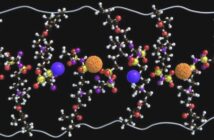
This new, multi-layered organic material for cobalt-free batteries formed a structure similar to graphite, as it extended outward in every direction. This feature made it both highly stable, and insoluble in the battery electrolyte. And as a result the prototype has successfully completed 2,000 cycles ‘with minimal degradation’ to date.
More Information
Cobalt-Free Lithium-Ion Battery on the Cards