


Bright iron pyrite mineral also goes by the name ‘fool’s gold’, because its pale brass-yellow luster looks like the precious mineral. Many credulous investors lost their money after they sunk cash into ‘gold-mining’ ventures that failed. Notwithstanding this, pyrite mineral is back in fashion. Indeed, it could make a new posse of investors wealthy, according to researchers.
Past and Future Uses for Bright Iron Pyrite
Sulfur-rich pyrite minerals functioned as flint stones in ancient Roman times, and for recent decades in sulfur dioxide production. We were musing over this interesting fact, when we learned from Wikipedia that Energizer uses shiny, gold-luster pyrite as its cathode in non-rechargeable lithium metal batteries.
The West Virginia University team discovered ‘plenty of lithium’ in bright iron pyrite minerals in shale. This is a geological term for finely stratified rock, that forms when pressure condenses mud or clay. Now we already know that lithium exists in some clay, and is mined as battery material.
“This discovery is unheard of,” a sedimentary geochemist commented, during the European Geosciences Union General Assembly 2024 in Vienna. “I am trying to understand how lithium and pyrite could be associated with one another.”
Potential for Higher Lithium Recovery from Pyrite
Mining.Com suggests a ‘curious interaction between lithium and pyrite’ may enable a higher recovery rate of the battery material. We already know that fool’s gold and true gold appear together in nature. This raises the interesting question of unprofitable tailings or drill cuttings left behind by old gold miners.
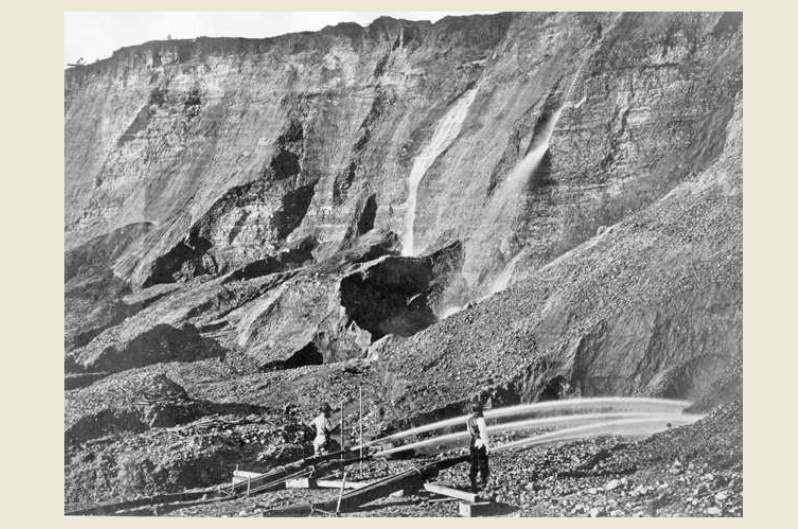
The West Virginia University team were chasing down this possibility, in a study to determine the possibility of re-mining old tailings. Because this could generate additional lithium they hoped, at a far lower carbon and environmental cost.
“This is a well-specific study,” one scientist notes. “I am convinced that this work is promising, because it hints at the possibility that certain shales could be a lithium source that doesn’t require new mines. We need to generate more sustainable energy without using a lot of energy resources to generate it.” That makes sense to us!
More Information
Environmental Impact of Lithium Mining
Deep-Sea Battery Mineral Mining a Step Closer


