Key to Operating Principles of Anode-Free Battery
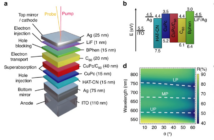
Anode-free schematics and energy density calculations. a) Cell schematic for carbon anodes, alloy anodes, and an anode-free configuration. b) Theoretical energy density comparison for various sodium anode materials. c) Schematic illustrating the requirements for enabling an all-solid-state, anode-free battery (University of California in San Diego)
A battery has always had two electrodes since the stored-energy revolution began. That’s the anode through which we charge it, and the cathode that sends that energy through an external circuit. But now a team from University of California in San Diego have achieved the improbable. They have defied convention, by creating a solid state sodium, anode-free battery with proven benefits.
Implications of a Sodium Solid-State, Anode-Free Battery
Eliminating the anode in a battery will save money, especially when using cheaper sodium metal. Solid electrolytes are also more stable than liquid ones. AL CIRCLE website explains how this combination ‘uses pressure to form dense sodium metal’ from powder.
An aluminum current collector then allows efficient, repetitive sodium plating and stripping, at ‘high capacities and speeds’. The researchers believe their method potentially opens the door to better batteries for electric vehicles, and grid storage too.
More Thoughts by California San Diego Researchers
The author of the study explains, “Although there have been previous sodium, solid-state, and anode-free batteries, no one has been able to combine these three ideas successfully until now.”
The team pressed pelletized aluminum onto the solid electrolyte separator, to improve the solid-to-solid interfacial contact. The aluminum powder formed a solid, even and uniform contact across the entire separator. This enabled greater density than traditional aluminum foil.
Moving on from lithium technology could lead to safer, more stable batteries using sodium, which is freely available in salty ocean water, and from earth’s crust. An anode-free battery like this could bring us closer to bypassing a semi-monopolistic raw material supply chain.
More Information
How Good Is Sodium-Ion Technology
Do Solid-State Batteries Matter Really?