Charging electric two-wheelers at home is usually quite simple, but a few details can make a difference in daily use. The type of vehicle can make a big difference too, so that’s a great place to start.
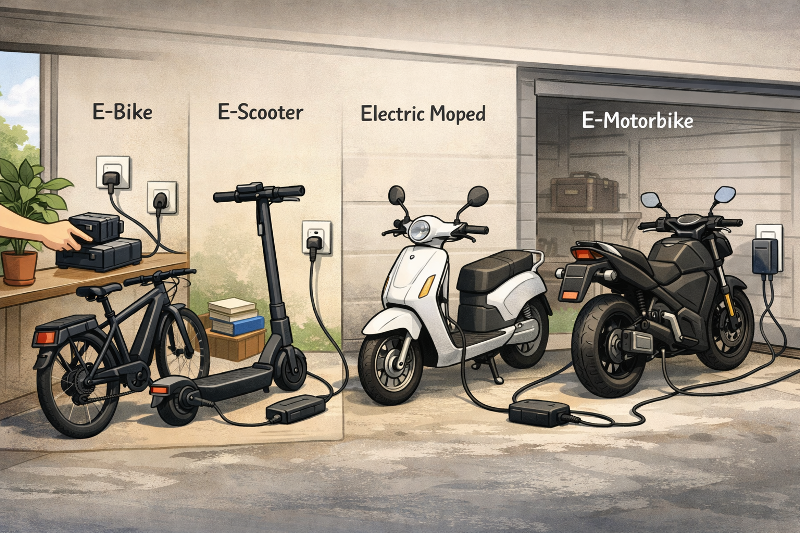
E-bicycles are like bicycles with small electric motors attached. Whereas e-scooters have narrow decks to stand on, small wheels, and no seat. E-mopeds are more advanced. E-motorbikes resemble conventional motorbikes with larger batteries and motors.
Charging Your Two Wheels At Home
The way you charge your two-wheeler can make a big difference too, especially if you live in an apartment, or rent a room in a home. Most e-bikes, e-scooters, and e-mopeds plug into normal household sockets.
You use a small charger, much like a laptop charger. This means you do not need special wiring or equipment. For many people, this is the biggest advantage over petrol vehicles.
Another key factor is whether the battery is removable. Many e-bikes and some mopeds let you take the battery out and charge it indoors. This may work well if you live in a flat or park far from a plug.
However, If the battery is fixed, then you must park your electric two wheeler close to a socket, or run a safe extension cable, which can be inconvenient. Ease of charging electric two-wheelers may dictate your final purchasing decision.
Charging Speed and Battery Size
Charging-time depends on battery size. This is why smaller e-scooters and e-bikes may charge in three to six hours, while larger e-mopeds and e-motorbikes can take six to twelve hours, or overnight.
Charging also depends on the availability of electricity. Plan ahead if you expect a power outage. Think safety whenever charging electric two-wheelers. Do this in a dry, cool, and ventilated space, and always use the correct charger.
More Information