Oxford in the south of England dates from the eighth century, and is a hub of academic excellence. The ancient buildings may suggest a community trapped in history. However behind the scenes they plan to be carbon-neutral by 2040, with grid-connected batteries playing a major role.
Grid-Connected Batteries and Carbon Neutrality
Earth was carbon neutral until two centuries ago. Decomposing vegetation, erupting volcanoes, and natural wildfires released atmospheric carbon. But there were sufficient trees to absorb this through their photosynthesis.
A carbon-neutral city aims to help restore this ancient atmospheric balance, by reducing its net carbon footprint to a minimum, ideally zero. Adopting total renewable energy using grid-connected batteries is a key strategy towards this goal.
The overall UK shift towards this objective is a massive challenge. Especially as electricity consumption for transport, heating, and industry could double by 2050, according to Energy Storage News. However, at the same time conventional electricity generation must vanish, because it is adding atmospheric carbon.
Transmission connected batteries are part of the solution, because they help to manage peak load. However, they stand to play an even more essential role in future. That’s because in time they will allow renewables to become UK’s primary energy source.
Ancient Oxford Modernizes Its Energy Supply
Oxford already has a private power network, supplying electricity to recharge its fleet of 104 electric buses. But that is only a small step on the road to carbon neutrality. A far larger project is rolling out in the form of the Energy Superhub Oxford (ESO) project.
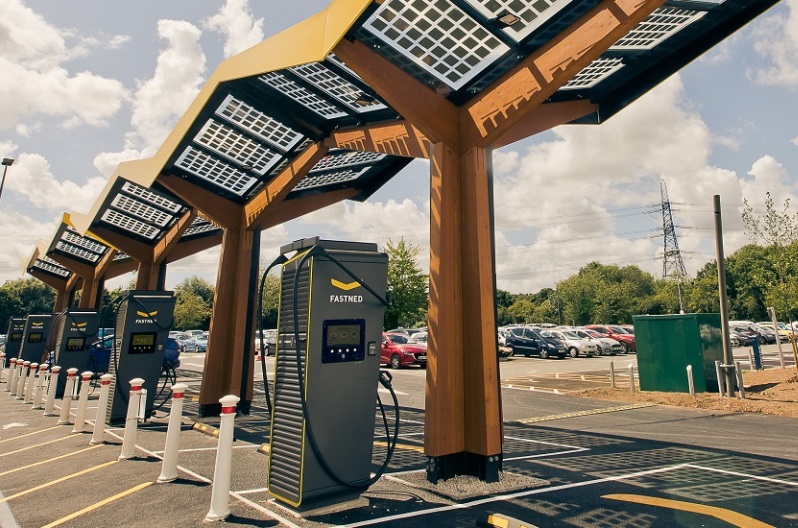
The ESO comprises grid-connected batteries delivering 52 megawatts, making it one of Europe’s largest. But we must see this in tandem with a powerful electric vehicle-charging network to grasp its overall significance. Oxford is setting an example that other cities must follow.
More Information
Impact of Electric Vehicles on Grids