Did you ever ask a friend what is inside lithium-ion batteries, and leave the conversation somewhat mystified? We will do our best to connect the dots up for you this time. After all, countless millions of North Americans use these batteries every day, and they help them remain in contact across the globe. And so they have a right to know what happens inside the battery case.
Chemicals Present Inside Lithium-Ion Batteries
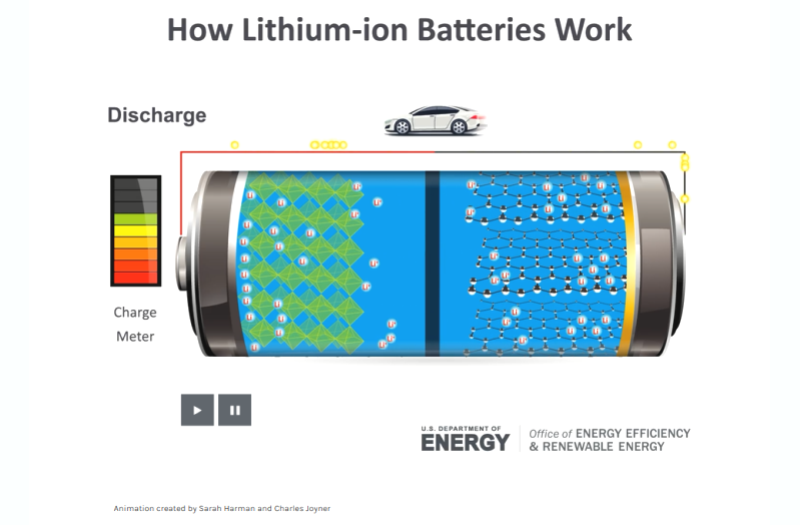
All batteries are similar, in that they power electrical devices using energy from their terminals. One of these terminals connects to the negative anode inside the case, which provides the energy. While the other, positive terminal receives the energy from the device, and returns in to the cathode inside the battery case.
In this way lithium-ion batteries perform similarly to nickel cadmium, alkaline, and our own sealed lead-acid batteries. However, from this point on the similarity ends, because each battery type uses a unique set of materials.
There are a number of varieties of lithium-ion batteries on the market, although what is inside lithium-ion batteries is fairly consistent across the range:
- The positive electrodes are typically a metal oxide coating over an aluminum current collector.
- The negative electrode is usually carbon or graphite material coated over a copper current collector.
- The electrolyte in lithium-ion batteries is invariably a lithium salt dissolved in an organic solvent.
What Happens When We Discharge a Lithium Battery
The negative anode in a charged lithium-ion battery, sends positively charged ions through the electrolyte to the positive cathode while discharging. When all of these ions have completed their journey, the battery is flat. But if the battery is rechargeable, then we can plug in the correct charger and return the ions to the anode.
Now you know what is inside lithium-ion batteries, your next question might be whether non-rechargeable, single use batteries have a future in our high-tech world. We suspect this option will be with us for many years to come. We should therefore recycle old batteries when they are spent, so we can reuse their materials over and over again.
More Information
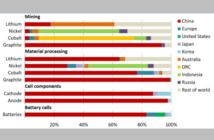
Lithium-Ion Material Supply Chain Exposed