Ensuring the right proportion of lithium-ion electrolyte in a battery should achieve several goals. The battery would be smaller and lighter, ensuring a higher energy density ratio. While at the same time we should also be closer to extracting the maximum potential from the ions. Scientists at University of Munster, Germany, set themselves the goal of determining what that magic number is.
The Optimum Amount of Electrolyte in Lithium-Ion Batteries
The team from the Munster MEET laboratory knew that the amount of electrolyte plays a major role in the performance of batteries. The less electrolyte there was, the higher the specific energy would be.
But by the same token, too little electrolyte would throttle battery performance. The team needed to know the right proportion of electrolyte after filling the cells. They experimented with three different pouch cells in their laboratory.
The Critical Factors Within the Overall Study Goal
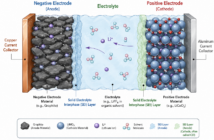
The electrolyte in a battery allows ions to travel between the negative and positive electrodes. However, in the case of lithium-ion batteries, the electrolyte must first create an effective solid electrolyte interphase (SEI) layer.
The optimum proportion of electrolyte in a lithium-ion battery depends on the following factors:
- The wetted surface area of the electrodes, which the electrolyte must cover adequately to achieve low charge transfer resistance.
- The ratio of the total surface area of the negative electrode to the amount of electrolyte, after allowing for the formation of the SEI layer.
- The combined cell pore volume of the negative and positive electrodes and the separator is also a critical factor.
Main Findings: The Right Proportion of Lithium-Ion Electrolyte
The team from the University of Munster found that, “The amount of electrolyte should range between 1.14 and 1.19 times the wet cell pore volume.” This calculation allows for electrode expansion during aging, progressive electrolyte decomposition, and the wetting process itself.
More Information
Electrolytes in Electro-Chemistry Moving Ions
Solid–Electrolyte Interphase – Dramatic News
Preview Image: Structure of a Lithium-Ion Battery