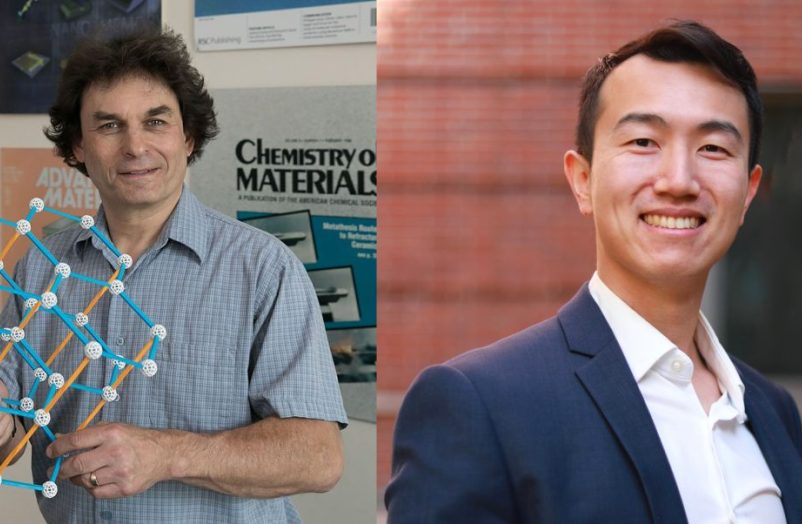
Distinguished professor Richard Kaner,and assistant professor Yuzhang Li, are both from University of California in Los Angeles. The pair both have enviable reputations in energy storage for utility grid applications. But now their latest project has them exploring zinc and vanadium for grid scale energy storage. And by all accounts, they seem to be on to a good thing.
What’s the Big Attraction of Zinc and Vanadium?
Zinc and vanadium are both abundant, nontoxic metals that are cheaper and safer than cobalt and lithium. Li and Kaner plan to use vanadium oxide as a battery cathode, and metallic zinc as the corresponding anode. In this way they hope to demonstrate the feasibility of using zinc and vanadium for grid scale energy storage.
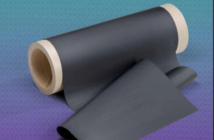
The team will use Kaner’s own ‘laser-scribed synthesis’ technique to produce a novel vanadium oxide cathode. And then, as the University of California in Los Angeles news channel explains, they will demonstrate the battery’s effectiveness with a powerful cryogenic electron microscopy technique pioneered by Li.
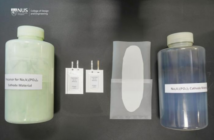
They will separate the vanadium oxide cathode from the metallic zinc anode with an aqueous water-based electrolyte, through which the ions will flow. This will be an improvement over lithium-ion batteries, Kaner promises. “Because lithium is very expensive” and “catches on fire and the batteries can explode.”
Future Grid Scale Storage Using Zinc and Vanadium
“Our goal is to develop battery chemistries based on water as the solvent,” explains assistant professor Yuzhang Li. “Making the battery less flammable and easier to recycle the materials.”
Laboratory results already demonstrate that zinc-ion batteries powered by aqueous chemistry, recycle at three times the rate of lithium batteries. This means that they can discharge, and replenish their energy three times faster than lithium-ion.
The team’s unpublished report confirms that Kaner and Li have achieved “the longest-cycling performance of a vanadium-based cathode, that simultaneously exhibits the highest cycling rate and capacity reported to date.” We wish them all the best with this exciting initiative.
More Information
Aqueous Zinc-Sulfur Chemistry Taps Door