The Triboelectric effect is an electric charge transfer between two objects, when they contact or slide against each other. The effect received much attention during the discovery of static electricity. We could demonstrate the phenomenon by rubbing a plastic pen on a cotton, wool, or polyester shirt sleeve. And then using that pen to pick up a scrap of paper
Researchers Use The Triboelectric Effect to Harvest Electricity
Scientists at Department of Mechanical and Aerospace Engineering at University of Alabama, have developed a novel triboelectric generator. But the big difference, this time, is they used commercially available tape, plastic, and aluminum as components according to MSN news channel.
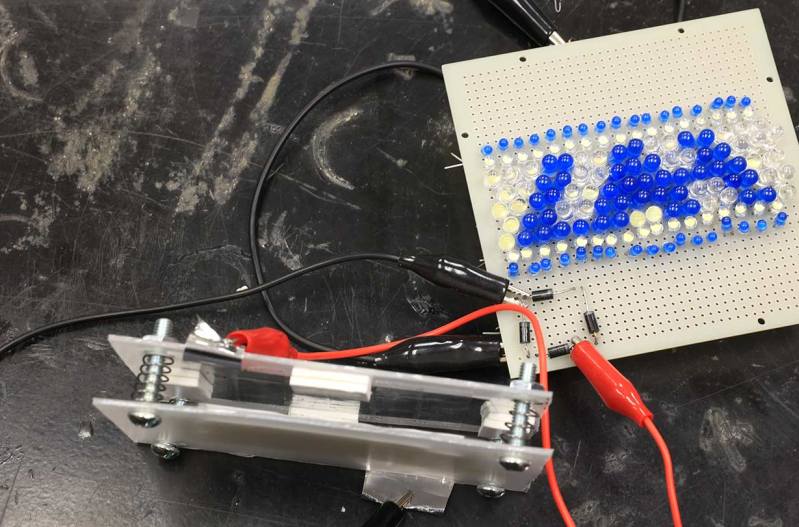
Their prototype ‘battery’ delivered sufficient power to energize over 100 LEDs, plus the laser pointer they presumably used during their media briefing. We found this sufficiently interesting to delve into what is effectively a triboelectric nanogenerator, or TENG for short.
By way of introduction, most TENGs have been prohibitively expensive to date, on account of their specialized materials. By contrast, the University of Alabama in Huntsville team, appear to have come up with an alternative way to demonstrate the triboelectric effect, which could become commercially viable.
An Insider View of Research Leading to the Announcement
ACS Publications published the full research report which we link to below, on January 13, 2025. However, UPS Battery Center was able to trace an earlier University of Alabama media release dated December 4, 2023, that we also link to below.
The University media release describes how the scientists created a new kind of triboelectric nanogenerator. One that produced electricity through the use of limestone putty. And that promised ‘a considerable cost saving over conventional manufacturing methods’.
This new device could conceivably convert mechanical or thermal energy for small wearable electronics, and sensor networks. Potential practical applications include heart monitor implants, biochip transponders for farm animals, and a variety of other sensors.
But the latest development at University of Alabama in Huntsville is even more intriguing. That’s because the team has found a way to substitute ‘double-sided adhesive tape’ for the limestone putty, reducing cost further. We will be back as soon as we have more news.
More Information
Electrostatic Generators: Birth of Battery Science
Electrostatic Charged Face Mask Hygiene
Preview Image: Turboelectric Generator Using Scotch Tape