Per- and polyfluoroalkyl (PFAS) substances are synthetic chemicals that are resistant to heat, grease, oil, and water. Scientists call them ‘forever chemicals’ because they don’t break down easily in the environment, and can harm the nervous systems of animals. We report on a new way of removing forever battery chemicals, when recycling lithium-ion batteries.
Removing Forever Battery Chemicals During Recycling
We append a link to a report in Nature Communications. This describes the clean energy sector as an “unrecognized and potentially growing source of international PFAS release”. The authors provide copious evidence of their deeply-concerning allegation in their lengthy report.
The researchers go on to emphasize the need to ensure that, “reduced CO2 emissions are not achieved at the expense of increasing global releases of persistent organic pollutants”.
We investigated this matter further, and found a second research report, that we also link to below. This one speaks of removing forever battery chemicals completely under conditions and temperatures greater than 2000 °C. These temperatures, it notes, are “typical for secondary combustion units in hazardous waste incinerators”.
Why This Second Finding in Important for Batteries
Lithium-ion batteries have become part of our everyday life. They are popular because they are efficient, but this comes with a catch. You see, their artificially-manufactured PFAS, or per- and polyfluoroalkyl substances, transport the ions in lithium-ion batteries.
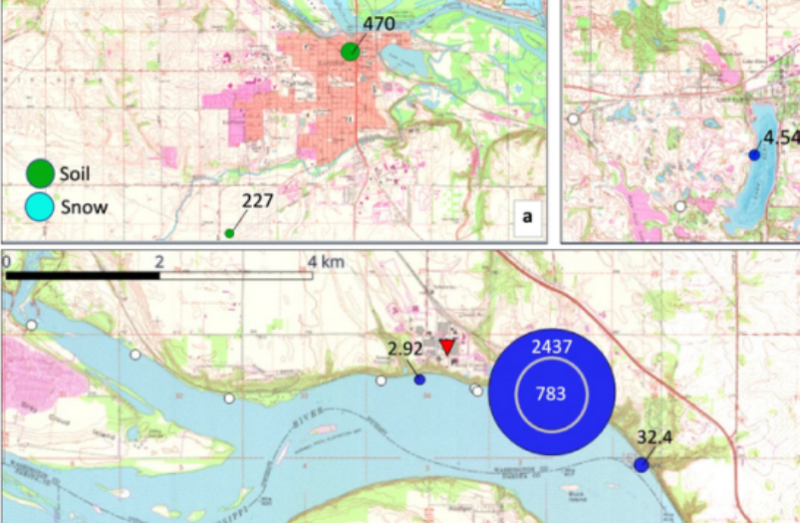
The INKL website explains how these ‘forever battery chemicals’ can leech into the soil, and remain there for decades. Our preview image shows how scientists tracked them down in Minnesota, but that is just one example.
The presence of PFAS chemicals in spent lithium-ion batteries, has implications for their recycling and disposal. The United States, for example, may be recycling less than 10% of its lithium-ion battery waste. Assuming the remaining 90% goes to landfills, this is contaminating the soil there for decades to come.
The Battery Council confirms that United States continues to successfully recycle over 95% of all spent lead-acid batteries. This makes these batteries the ‘number one recycled product’ in that country. We are proud to be part of the lead-acid supply chain.
More Information
Lithium Batteries Cause PFAS Substances
40% of Nasty Landfill Chemicals from Batteries
Preview Image: Sample PFAS Count in Minnesota
Research Report on PFAS Release in Nature Communications