Canadian scientists have joined forces, and achieved 380,000 charging cycles with a seawater battery. They shared resources from University of Alberta, and Canadian Light Source at University of Saskatchewan, a while ago. But now their efforts have born fruit with a battery with an exceptional cycle life. The news channels are alive with their discovery.
380,000 Cycle Seawater Battery Closer to Reality
“Current lithium batteries have reached their limitations in terms of energy storage capability, life cycle, and safety.” So says Xiaolei Wang, a professor of chemical engineering at the University of Alberta, in Edmonton.
“They’re good for applications like electric vehicles and portable electronics, but they’re not suitable for large-scale grid-level energy storage.” In other words, we need a better solution, for times when the wind is not blowing, and the sun does not shine.
The two teams have been applying their minds to grid-level aqueous batteries, that can use seawater as an electrolyte. These would be less expensive than lithium-ion batteries, and more environmentally friendly too.
However, the problem to date has been finding the right material to use for the anode in seawater batteries. In the early stages, the researchers could not have foreseen they would end up achieving 380,000 cycles with a seawater battery!
Anode From Polymer Nanosheets And Carbon Nanotubes
The Canadian Light Source article explains how the new anode made of polymer nanosheets and carbon nanotubes works. It is actually capable of storing a variety of different ions, so we shall watch this space with interest. However, the real winner to date has been teaming the anode with seawater.
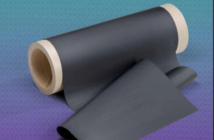
This is the combination that enables 380,000 cycles with a seawater battery. The anode made from polymer nanosheets and carbon nanotubes, is thicker than that of other alternatives.
However, this time this factor is a positive. The thicker material has far greater capacity than other options. It is also sufficiently robust to withstand 380,000 discharges and recharges, without meaningfully degrading.
Aqueous batteries based on this new anode technology could help realize universal energy storage, a team member enthuses. This greatly expands the options for abundant renewable energy resources.
More Information
Net And Fabric Seawater Batteries For Lights
High Performance Sodium-Ion Cathode
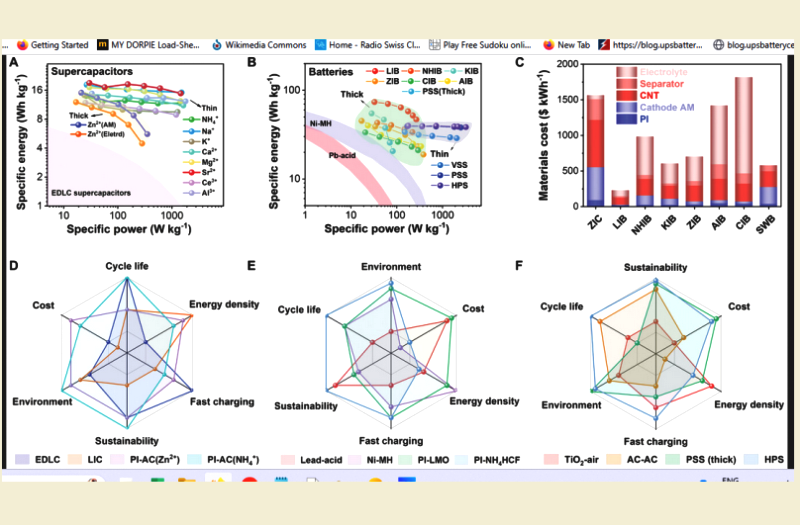
Preview Image: Energy Power And Cost Analysis