The critical minerals for energy transition include lithium, cobalt, and certain rare earth elements. We could not have batteries, energy storage, and electric vehicles as we know them, without them. Other materials may move center stage in future. However, none are infinitely available, and we will always need to keep an eye on our supply chains.
Critical Mineral Demand is Escalating Rapidly
The World Economic Forum confirms the International Energy Agency’s predictions as follows:
- Demand for critical minerals will need to increase three times by 2030.
- Demand for critical minerals will need to increase four times by 2040.
These increases may not be easy to achieve world-wide. That’s because some of the rare minerals are concentrated in a few areas, especially China. And as a result of this, their prices are volatile, especially in times of geopolitical tensions and import / export duties.
Not All Critical Energy Minerals are Abundant
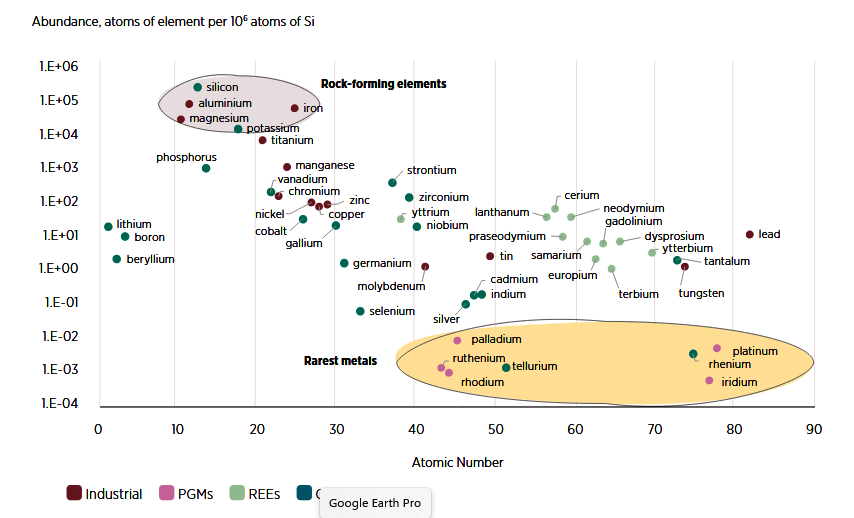
Not all critical minerals for energy transition are equally available, as we illustrate in the the diagram above. The definition of ‘critical mineral’ also depends on the user. For example, the USA identifies 50, while the EU has 34 essential minerals on its list.
The most widely-listed critical battery minerals are cobalt, graphite, lithium, manganese, and nickel. Elsewhere, aluminum and copper are vital for electricity distribution, while some rare earth materials play an essential role in electric vehicle motors, and wind turbines.
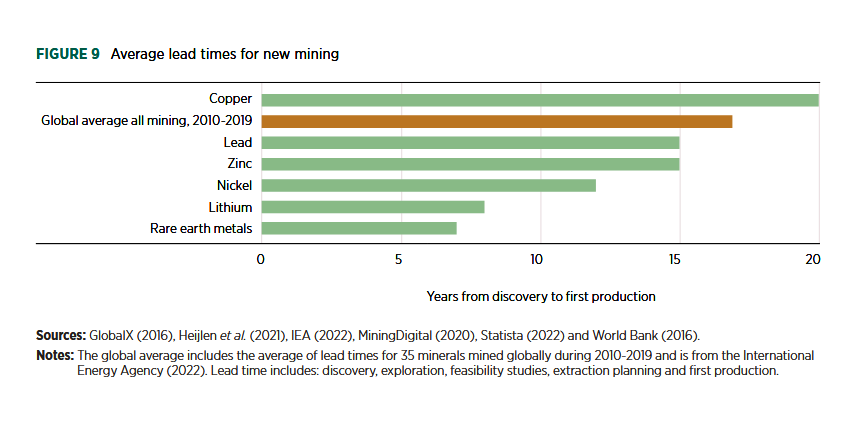
Being abundant does not mean the same as accessible. For example, copper is not a rare element. However, World Economic Forum states “the typical lead time for a new mine to start delivering copper to market is about 20 years”. On that basis, it would take a brave investor to develop a new mine.
More Information
Less Minerals for Batteries in Future
Exploiting the Battery-Mineral Loop