Dr Matthew Priestley works at the School of Electrical Engineering and Telecommunications at the University of New South Wales. He believes most consumers have few concerns over lithium-ion batteries, because they do not understand the problems behind battery fires. Dr Priestley is developing a short information program to close this gap, as summarized in the link below.
Are Concerns Over Lithium-Ion Batteries Warranted?
We certainly should take extra care with our lithium-ion batteries nowadays. Any type of battery can be hazardous if we use it incorrectly. However, lithium ions in a lithium salt solution with ethylene carbonate, form an electrolyte which is highly volatile and flammable.
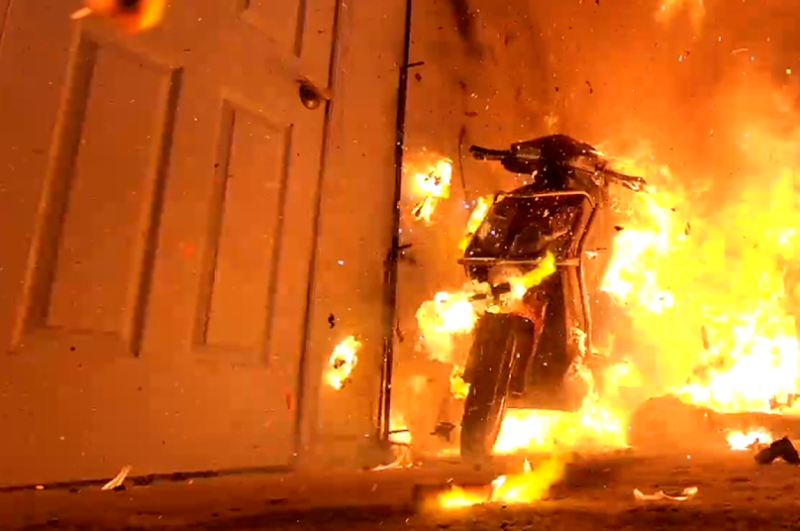
Battery manufacturers and consumers tolerate this inherent stability, because lithium-ion batteries store large amounts of energy. Dr Matthew Priestley’s concerns over lithium-ion batteries arise from one simple fact. Their byproduct of heat can potentially lead to a fire or even an explosion.
If a lithium-ion battery fails, or suffers damage for whatever reason, then that stored heat can release instantly. The temperature can rise as high as 400 degrees celsius, or 752 degrees fahrenheit. A lithium-ion battery fire is difficult to smother, because an internal chemical reaction releases free oxygen which feeds fires.
What Factors Cause Lithium-Ion Batteries to Overheat?
There are several ways a lithium-ion battery could overheat to a critical point:
- We could use a faulty battery charger, or overcharge the battery.
- The battery can fail if we short-circuit the terminals accidentally.
- But the battery could also fail if the electrodes short-circuit inside.
The electrodes could short-circuit inside the battery, if it suffers damage, or something goes wrong internally. Whatever the cause may be, the heat can promote a chemical reaction. This can lead to a self-fulfilling, thermal runaway event, that spreads the fire further.
More Information
Used Lithium-Ion Battery Fires Smouldering
Upward Spiral of Battery Thermal Runaway