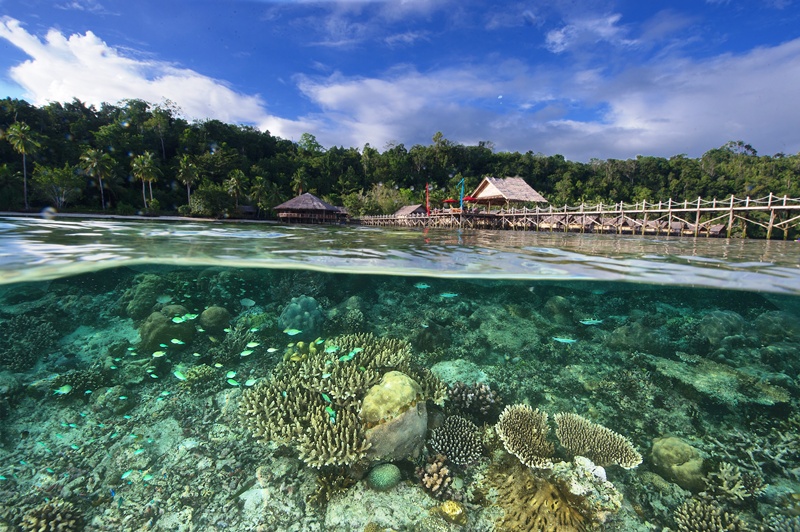
It is not for nothing that visitors call Raja Ampat archipelago off Southwest Papau New Guinea, the Amazon of the Seas. That’s because the group of four main islands hosts thousands of marine organisms, from the tiniest shrimps to giant whales. Pottery-making humans arrived 3,000 years ago, and live in peace with nature. Who could imagine battery mining in an island paradise like this?
How Battery Mining Scars an Island Paradise
BBC Science revealed the sad story on June 13, 2025, after environmental campaigners Global Witness, tipped it off. We append a link to the BBC article below, which features images taken with a drone.
We are horrified that anybody could create desecration like this. Battery minerals should definitely not be mined this way. Indonesia’s Ministry for Environment told the BBC, “Raja Ampat’s biodiversity is a world heritage that must be protected.
“We pay great attention to mining activities that occur in the area.” The Global Witness provided this image of ‘forest loss and sediment run-off into waters that are home to biodiverse coral reefs.’

Global Witness explains how nickel mining has been expanding in Raja Ampat, in response to the global demand for electric vehicles. We understand that the local indigenous communities are up in arms about battery mining, in their island paradise.
Raja Ampat archipelago received UNESCO ‘Geopark’ status in 2023, to celebrate and support its unique geology and culture. A network of marine protected areas covers more than two million hectares of its waters. Its landscape appears on the country’s highest-value 100,000 rupiah note.
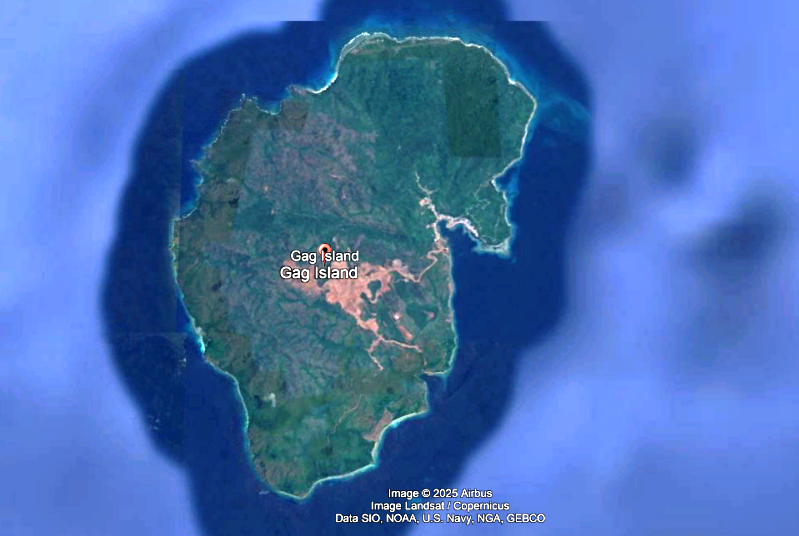
We visited Google Earth to discover the extent of the nickel mining on Raja Ampat archipelago. If anything, what we saw was even more widespread than what we feared. The five nickel mining companies are not acting illegally. They have permits from the Indonesian government.
More Information
Green Nickel for Sustainable Electrification
Nickel-Iron Battery History You May Not Know
Preview Image: Once Unspoiled Raja Ampat Archipelago