The small rural passenger railway services in France, are long shut down victims of cost-cutting and using road-transport. But the railway lines are still there, and residents are becoming more conscious of the carbon cost of private transport, and the congestion. Hope is at hand though, as they watch LOHR’s Draisy and Cristal innovate etransport before their eyes. Soon, they hope to see public transport services return to their beloved countryside.
Draisy Brings eTransport Back to Rural France
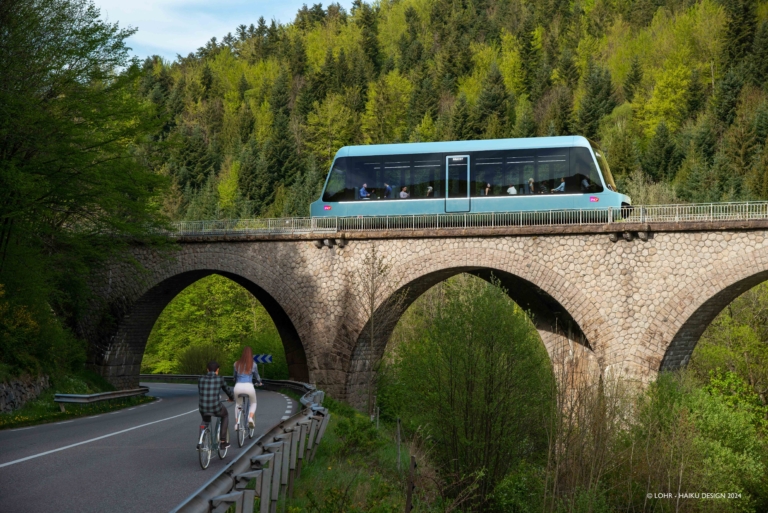
Draisy is a very light, single-carriage electric train for rail passengers. The developer LOHR is adapting their dream to be compatible with aging rail infrastructure. They are a joint winner of the French national railway company SNCF’s competition, to achieve this noble goal.
The Draisy specification includes a 60-mile battery range, and a maximum 60-mile-per-hour speed for transporting 80 passengers safely. Some 30 of them will have seats, with the remainder standing. But especially for safety, the 20-tonne train will respect the aging rail network as much as it does the environment.
The design limits the weight on the rails to 10-tonnes per axle, each of which has steerable wheel sets. This innovation will keep operating costs down to 40% of the industry norm. The prototype line should be up and running by 2026, with nation-wide services available from 2028 onward.
Cristal Innovates Road eTransport Too
Every fixed, light rail service needs a public road shuttle to bring its customers to pick-up and drop-off points. LOHR has developed modular Cristal road units to complete the picture. In this way Draisy and Cristal will innovate etransport in a holistic way that borders on the unique.
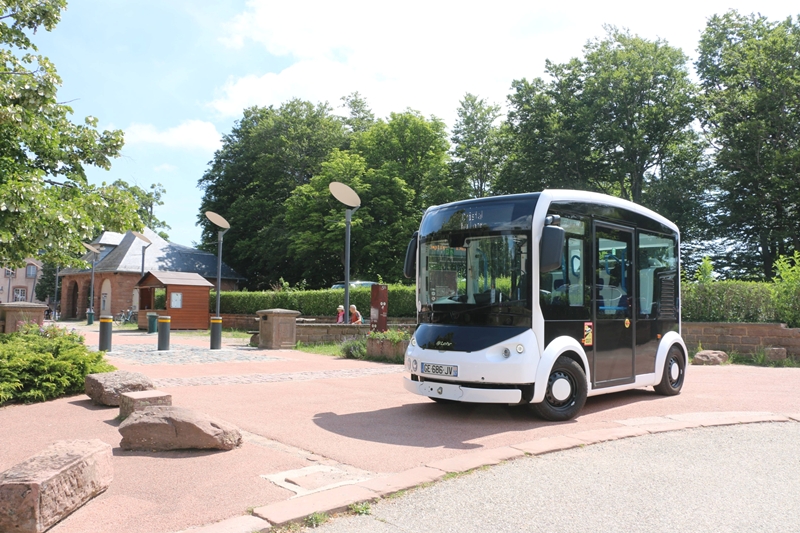
Cristal delivers a 100% battery electric shuttle service, that is simply quieter, cleaner, and more efficient than conventional alternatives. It can operate as a single-unit shuttle bus, or as a regular bus service, in which case units can connect together automatically to increase passenger capacity.
The onboard battery in each mini electric bus has enough energy to run all day long. It charges fully in 2 hours, or to 50% in half that time. Maximum speed is a safe 30 miles-per-hour, with a battery range of 60 miles. Every unit has an automatic ramp to accommodate wheel chairs and passengers with disabilities. This sounds like a real winner to us!
More Information
Battery Golf Carts Becoming Local Transport