After numerous false starts, the answer to the question, ‘could sodium-ion rival lithium-ion’ is looking more like perhaps. This change of fortune is due to breakthrough work by University of Surrey in England. They changed the rules of the game when they kept a critical battery material moist.
How Does Water Help Sodium-Ion Rival Lithium-Ion
That’s a good question too, because conventional wisdom believes in keeping water away from battery contents. This strategy has, however, inadvertently maintained a gap between lithium-ion and sodium-ion battery performance.
This difference has also come at a cost to battery consumers, who have to pay for expensive lithium metal. Whereas cheaper sodium metal would be an obvious choice, if we could only ramp up its performance.
The team of University of Surrey scientists decided to try a different approach, that helped sodium-ion rival lithium-ion chemistry. They investigated sodium vanadium oxide, and discovered something interesting.
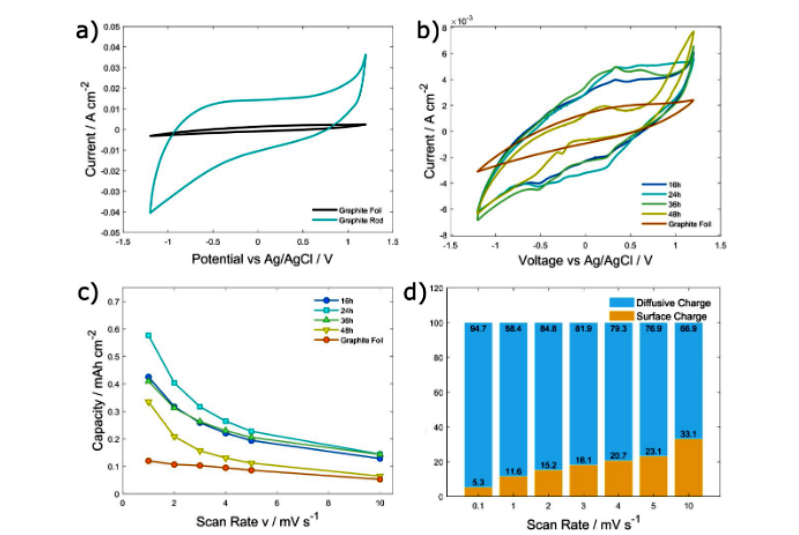
They found that allowing the material to retain its moisture significantly enhanced its performance inside a battery. Specifically, the moist sodium vanadate hydrate compound they used recharged faster, and was stable over 400 charge cycles.
Better Sodium-Ion Battery Performance in a Laboratory
The battery capacity improved hugely too. The prototype battery cathode held nearly twice as much charge as standard sodium-ion cathode materials. Daniel Commandeur, research fellow at University of Surrey School of Chemistry and Chemical Engineering, and lead author comments:
“Our results were completely unexpected. Sodium vanadium oxide has been around for years, and people usually heat-treat it to remove the water because it’s thought to cause problems.”
The researchers then tested the compound while they exposed it to salt water. This option also performed well, and as a plus removed sodium-ions from the solution. Being able to desalinate salt water this way is an added advantage.
More Information
Sodium-Ion Batteries Are Closing Gap
Where Are Sodium-Ion Batteries Now?
Preview Image: Comparing Battery Parameters