All batteries that we find in stores work on the same basic principles, although their materials inside their cases vary. These materials influence the amount of power a battery puts out. We illustrate the technology of fruit batteries in a classic lemon battery experiment. But first we need to share a little theory.
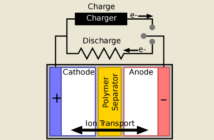
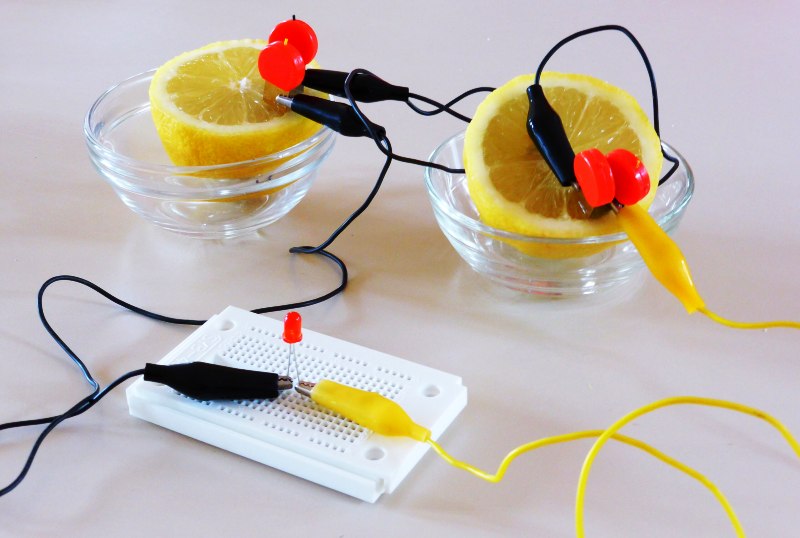
Every battery has two electrodes, plus an electrolyte between them that conducts ions. A lemon battery uses a copper nail and a zinc nail as electrodes, and the juice inside a lemon as electrolyte. So how do these materials generate electricity?
The Technology Inside Fruit Batteries
There are energized atoms called ions in lemon juice. These ions attack the zinc nail to form zinc ions. The zinc ions travel through the lemon juice to the copper nail, which attracts them. However, there’s another side to this story we need to explain first.
If we connect the copper nail and the zinc nail through a conductor, we get electricity. This energy flows through the conductor as the ions convert to electrons. But we need both these processes to happen simultaneously before we get the electricity.
We can watch the electrons flowing between the electrodes in two different ways:
- Using a multimeter set to measure small amounts of electricity, as the electrons pass through it.
- Using an LED light as the conductor so we can see the electricity working in real time.
We could try other fruits as well, and compare their voltages. These will vary depending on the quantity of the ions in their juice. So much for the technology of fruit batteries. Perhaps you might also like to do a pumpkin battery experiment sometime?
Building a Lemon Battery at Home
You could build a lemon battery at home or at school, by following the link to Imperial College London, which we include below. Its real easy to do, provided you take sensible precautions. Please have an adult with you to make sure you follow the procedure correctly.
More Information
Why Some Fruit and Veg Conduct Electricity