Aqueous, water-based zinc batteries have been on the back burner, despite their potential for energy storage. To date, the hurdles have been the liquid electrolyte breaking down, and zinc dendrites forming.
But now, an imaginative team at University of Maryland appears to have resolved this obstacle with a modified electrolyte. One that can form a robust interphase with the battery electrodes.
The Maryland Solution for Aqueous Zinc Batteries
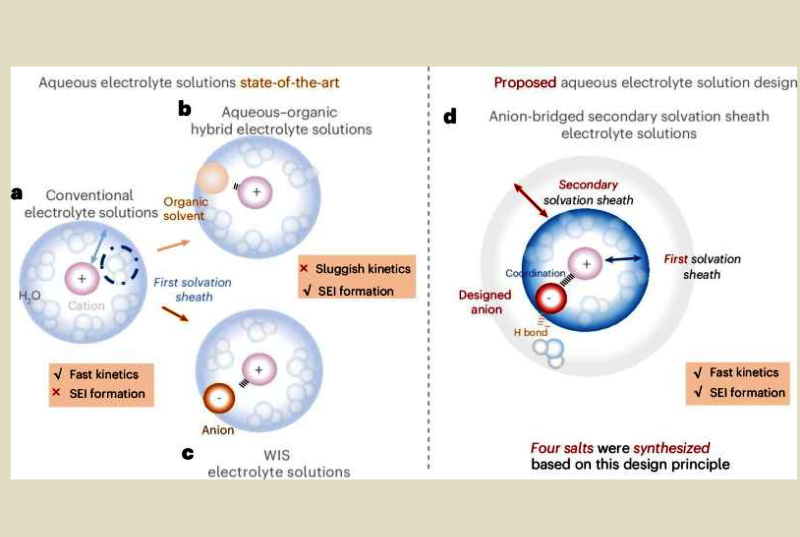
The team at the U.S. university researched existing water-in-salt, and aqueous–organic hybrid electrolytes that worked. However, these were unfortunately neither chemically efficient nor cost-effective.
And so they diverted their attention to a series of water based electrolytes with various concentrations of different salts. These solutions encouraged the negative Ions to move closer to the zinc ions, thereby creating a more stable electrolyte.
A New Electrolyte for Zinc Batteries Emerges
This novel electrolyte for aqueous, water-based zinc batteries continues the trend to optimize the material between the electrodes. Previous efforts have focused on the electrodes themselves, but the focus appears to be shifting.
More stable zinc battery liquid electrolytes are becoming critical, to meet the demand for longer-lasting batteries for bulk renewable-energy storage. The need for a viable alternative to lithium-ion is also becoming more urgent.
The precise concentration of the salts in the prototype liquid electrolytes, was the key to achieving the correct balance without disturbing other battery properties. But in the end, it was worth it.
Why This Matters in the Long Run
The hunt is on for batteries with long lives, that are able to safely store renewable energy for longer periods. The modified aqueous zinc batteries from the University of Maryland, retained 99% of their original efficiency, after 1,000 discharge-recharge cycles.
We report this work because it appears to be a step down a road that is proving to be long, and fraught with technical potholes. These aqueous water-based electrolytes for zinc batteries could well have closed one of the gaps.
More Information
Go For Gold With Zinc Batteries
Seawater Zinc-Air Battery Catalyst
Preview Image: The Chosen Salt Blend