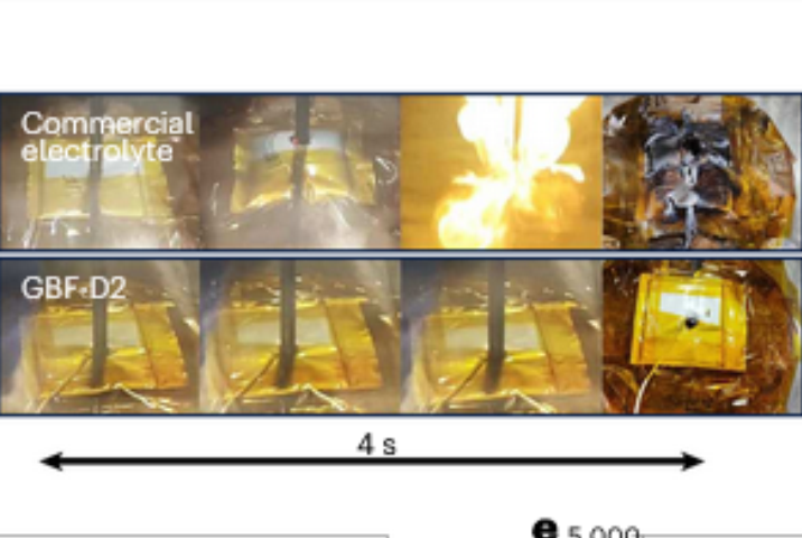
Lithium-ion batteries seem to be everywhere we go, but they have a risky habit of causing fires. Often, users are to blame, but at other times, batteries themselves are the reason. Scientists at Chinese University of Hong Kong, have found a way of tweaking lithium-ion electrolyte that prevents thermal runaway.
The Twin Dilemma of Lithium-Ion Batteries
The team at Chinese University of Hong Kong, faced a pair of conflicting challenges. They already knew that they had to control lithium battery temperature to prevent thermal runaway, but they were chasing a pair of conflicting targets:
- To increase battery performance, they needed to focus on chemical reactions that occur at room temperature.
- But to improve battery safety – and here’s the catch – they had to focus on chemical reactions occurring at greater temperatures.
Much research had already gone into developing safer solid or gel- electrolytes, to replace lithium-ion’s notoriously flammable liquid version. However, replacing the liquid with a solid or a gel, requires major changes to battery production lines.
And so the team at Chinese University of Hong Kong came up with idea of tweaking the existing electrolyte instead, and found this had considerable merit.
Tweaking the Electrolyte in Two Stages
The Hong Kong scientists came up with the idea of a temperature-sensitive material, that they could add to existing lithium-ion electrolyte. One that would ensure good performance at room temperature, but also remain stable at higher temperatures.
The key, they found, was to dissolve two different solvents in the liquid electrolyte, so they achieved both those goals:
- The first solvent optimized battery performance by speeding the chemical reactions.
- The second one kicked in as soon as the battery began heating, and slowed those chemical reactions.
The new battery still had 80% of its original capacity after 1,000 discharge / recharge cycles. To complete the positive picture, there is no need to change production lines. Battery manufacturers just have to add the solvents to existing liquid electrolyte.
More Information
Thermal Runaway Management in Aircraft
Triggering Battery Thermal Runaway