Fires in lithium-ion batteries only happen very occasionally. Although, if something does go wrong inside their cases, a large amount of energy may release suddenly.
Because the energy is inside the battery case, sufficient internal pressure may burst it open. A fire may erupt that rapidly spreads to the surrounding environment.
Built-In Safety Feature In Lithium-Ion Batteries
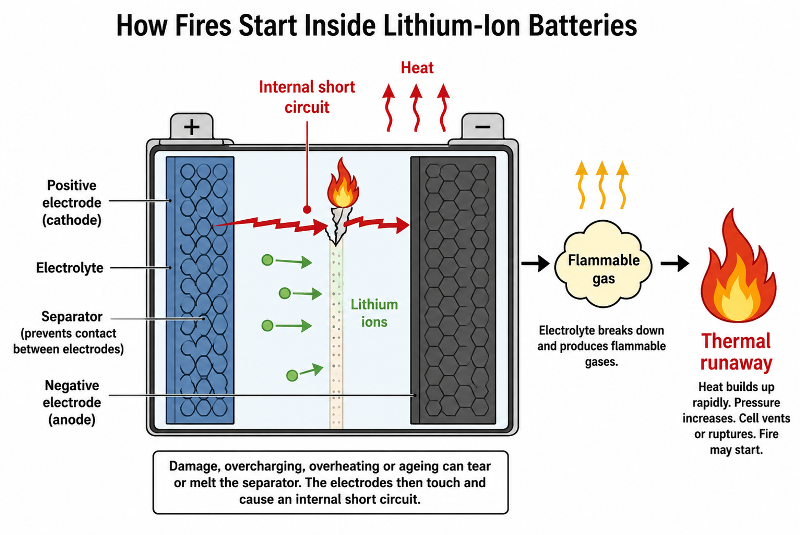
A lithium-ion battery contains a positive electrode, a negative electrode, an electrolyte, and a thin separator keeping the electrodes apart. This separator prevents direct contact between the electrodes, while still allowing lithium ions to move between them.
Fires in lithium-ion batteries may start after damage to the separator. This can be due to a defect, physical damage, incorrect charging, overheating, or natural battery ageing.
What Happens If a Lithium-Ion Separator Fails?
Fires in lithium-ion batteries can begin if their separators fail, and the electrodes touch each other. This short circuit allows a large amount of current to flow, and generates intense heat inside the cell.
Thermal Runaway May Follow Leading To a Fire
As the temperature rises, the electrolyte can begin to decompose, and release flammable gases. The heat may also trigger chemical reactions that release even more energy.
Engineers call this process thermal runaway, because the temperature continues rising without an external heat source.
Rising Heat Causes Pressure Inside the Battery Case
As the pressure increases, the battery casing may vent hot gases or break open. If these gases encounter enough oxygen, a fire may trigger. This may spread to neighboring battery cells, creating a chain reaction inside a battery pack.
Technology Mitigating the Risk of Lithium-Ion Fires
Modern battery management systems, stronger separators, better cooling systems, and carefully designed charging controls, all reduce the risk of thermal runaway. While these may reduce the danger, the risk will always be there.
We recommend purchasing batteries from suppliers we know we can trust, and always using them according to their instructions. Sporadic lithium-ion fires will continue for years to come, until the technical issues are resolved, and all batteries sold before that date are responsibly disposed of.
More Information From Our Battery Blog