Battery manufacturers have hoped to build one battery that does everything well for many years. The reality is different. Every battery chemistry has its strengths and weaknesses. Sodium-ion batteries are no exception. So where will sodium-ion battery applications roll out first?
Not Every Battery User Needs Maximum Energy Levels
Lithium-ion batteries remain the best choice, when low weight and long driving range matter most. Smartphones, laptops and premium electric vehicles all benefit from lithium’s high energy density.
However, many applications do not need that maximum energy. They need low cost, long service life and reliable performance instead.
Could Renewable Energy Storage Suit Sodium-Ion?
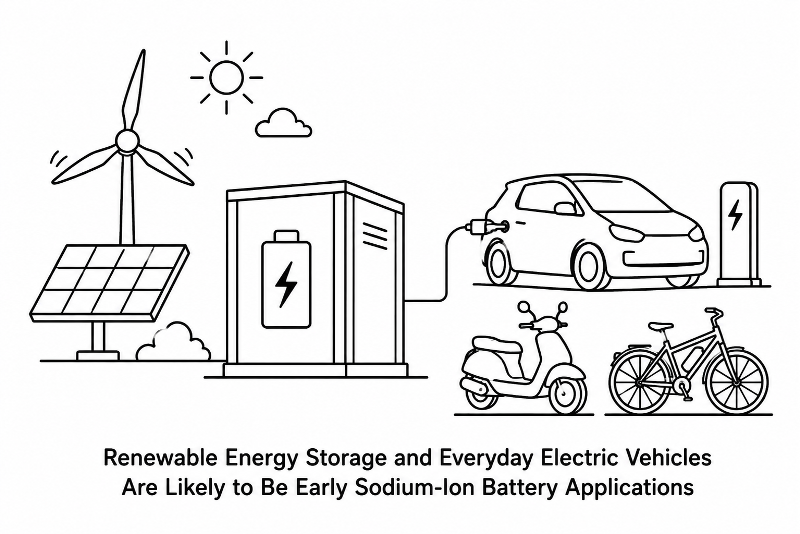
Renewable energy storage could well prove to be a promising application. Solar panels and wind turbines often generate electricity when demand is low. Batteries store this surplus energy until we need it later. https://www.neso.energy/energy-101/electricity-explained/how-do-we-balance-grid/how-does-storage-help-us-balance-grid
Sodium could well become an economical choice for storing large amounts of electricity, since it is so abundant.
How About Using Sodium-Ion For Electric Transport?
Many city cars, delivery vehicles, buses, and scooters travel predictable distances every day. They may not need the longest possible range. Buyers may prefer lower purchase prices and reliable performance instead.
This could well prove to be one of sodium-ion battery’s best applications. This, however, would probably not apply to situations where high power and maximum driving range are priorities.
Finding The Right Applications for Sodium Chemistry
We believe that sodium-ion technology is more likely to create its own niche, rather than displacing existing battery chemistries. Lead-acid, lithium-ion and sodium-ion batteries all have their own applications where they perform best.
Battery Users Will Increasingly Have More Choices
Our next article looks beyond today’s products, to explore how sodium-ion batteries are developing. And also why researchers believe their performance will continue to improve.
Every battery chemistry has strengths and limitations. Choosing the right battery depends on matching its characteristics to the job we need it to do.
More Information From Our Battery Blog