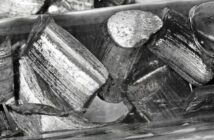
Gaston Planté’s lead-acid battery proved that electricity could be stored and repeatedly recovered. However, his original design had an important limitation. Then Camille Alphonse Faure Improved improved lead-acid battery technology, and swept this away.
Plates Needed Lengthy Periods Of Repeated Charging
The lead plates needed lengthy periods of repeated charging and discharging to develop sufficient active material. This ‘formation process’ was slow, and made the production of higher-capacity batteries difficult..
A major improvement came in 1881, through the work of the French inventor and engineer Camille Alphonse Faure. Faure developed a method that dramatically improved the practicality of the lead-acid battery and helped prepare it for wider commercial use.
Faure Applied a Paste Containing Lead Compounds
Camille Alphonse Faure applied a paste containing lead compounds directly onto the plates. This, instead of relying mainly on repeated electrochemical cycling to create active material on the surface of the lead plates.
This pasted material converted into the active substances needed for battery operation during charging.
This Innovation Offered Several Important Advantages
This innovation offered several important advantages. It greatly increased the amount of active material available within a given plate area. It also reduced the time required to manufacture a battery. As a result, batteries could provide greater capacity without becoming proportionally larger.
This Also Made It Easier To Manufacture Lead-Acid Batteries
Faure’s improvement also made it easier to manufacture lead-acid batteries on a commercial scale. The battery was no longer simply a laboratory curiosity, or a specialised scientific device. Finally, it was becoming a practical source of stored electrical energy.
Faure Did Not Replace Planté’s Fundamental Invention
Faure did not replace Planté’s fundamental invention. Instead, he solved one of its most significant practical weaknesses. Planté had established the principle, while Faure’s pasted-plate approach helped make the technology more powerful and commercially useful.
More Information From Our Battery Blog