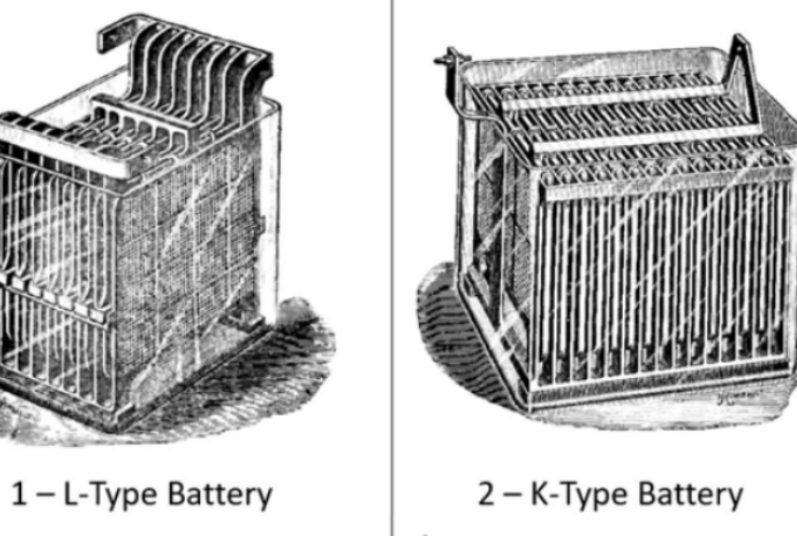
Lead grids changed the lead-acid battery as the next step. This was after Camille Alphonse Faure’s pasted-plate process changed lead-acid battery manufacturing.
Volckmar Replaced The Lead Sheet With a Lead Grid
The next stage arrived in 1881, when Ernest Volckmar replaced the heavy lead sheet with a lead grid. The grid provided both mechanical support, and a path for electrical current.
It also allowed the active material to cover a much larger area without requiring a solid sheet of lead. This was how lead grids changed the lead-acid battery irrevocably.
Then Scudamore Sellon Developed The Idea Further
Scudamore Sellon developed the idea further by using lead-antimony alloys for grids. Adding antimony made the lead considerably stronger and more rigid.
This was important because the active material expanded and contracted during battery operation. A weak plate could bend, crack or lose its active material.
This Was a Major Step Toward Practical Mass Production
These developments were a major step toward practical mass production. Manufacturers could cast grids in large numbers and then fill them with prepared active material. The process was much faster than Planté’s original method.
The Basic Principle Remains Familiar Today.
The basic principle remains familiar today. A lead-acid battery plate is not simply a solid piece of lead. It is a carefully designed framework that supports active material while carrying electrical current.
The Grid Became Much More Than a Support
The grid was therefore much more than a support. It became one of the essential engineering components. These allowed the lead-acid battery to move from an experimental invention, towards a commercially useful product.
More Information
Electrochemistry in Lead-Acid Batteries