French scientist Gaston Planté changed the history of batteries in 1859. That was when he created the first lead-acid battery. His invention used materials that were surprisingly simple: lead, sulfuric acid and water.
But what was the difference that allowed those simple materials to produce electricity, and then be restored for another cycle?
The Solution Was As Simple As Two Lead Plates
Planté’s original battery contained two sheets of lead. First he rolled them up with a linen separator between. Then he placed them in a container holding dilute sulfuric acid.
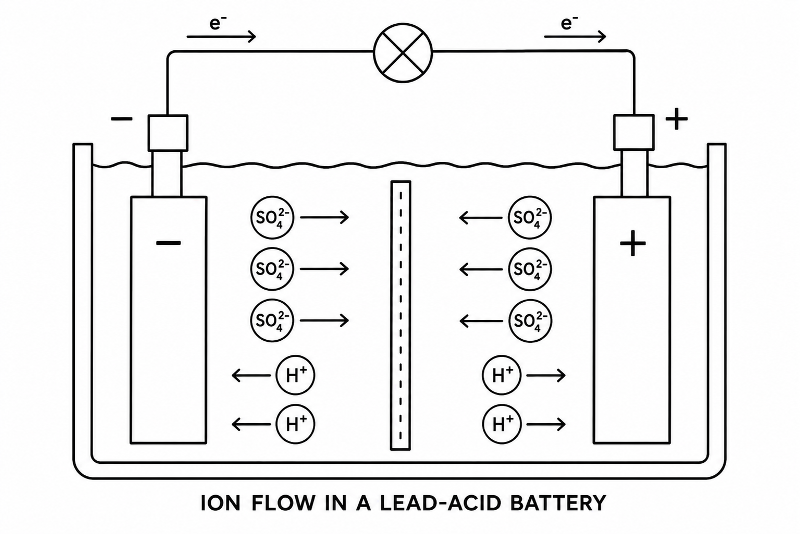
The two lead plates in the first lead-acid battery connected to an electrical circuit. When the circuit was live, the chemical reactions taking place between the plates and the acid produced an electrical current.
There Was One Important Difference In Planté’s Battery
There was an important difference between Planté’s battery and an ordinary disposable battery. Its chemical reactions could be reversed!
Charging The First Lead-Acid Battery Altered the Plates
The battery did not immediately achieve its full potential. Planté discovered that repeatedly charging and discharging the first lead-acid battery gradually changed the surfaces of the lead plates.
During charging, material formed on the plates. The positive plate gradually developed a layer of lead dioxide, while the other plate became more suitable for storing chemical energy. The battery could now deliver its full potential until it used it up.
Recharging Restored the Battery To Its Near-Original State
The most remarkable feature was what happened next. An external electrical supply forced the chemical changes to run in the opposite direction.
The plates were gradually restored to their charged condition, and the sulfuric acid became stronger again. The battery could then supply electricity once more.
Planté’s Greatest Achievement: A Rechargeable Battery
That was Planté’s great achievement. His lead-acid battery introduced a practical way of reversing the chemical changes, and using the same battery over and over again.
More Information From Our Battery Blog