Faure’s pasted plates solved one major problem in lead-acid battery production. They made it much faster to put active material onto a plate. But another problem remained, before tubular plates made lead-acid batteries even stronger.
Active Material Could Expand, Contract And Loosen
During charging and discharging, the active material could expand, contract and gradually loosen from its supporting structure.
Manufacturers wanted batteries that could withstand demanding, repeated use. They needed a better way to contain the positive active material.
A Tubular Plate Fixed That – A Definitive Answer!
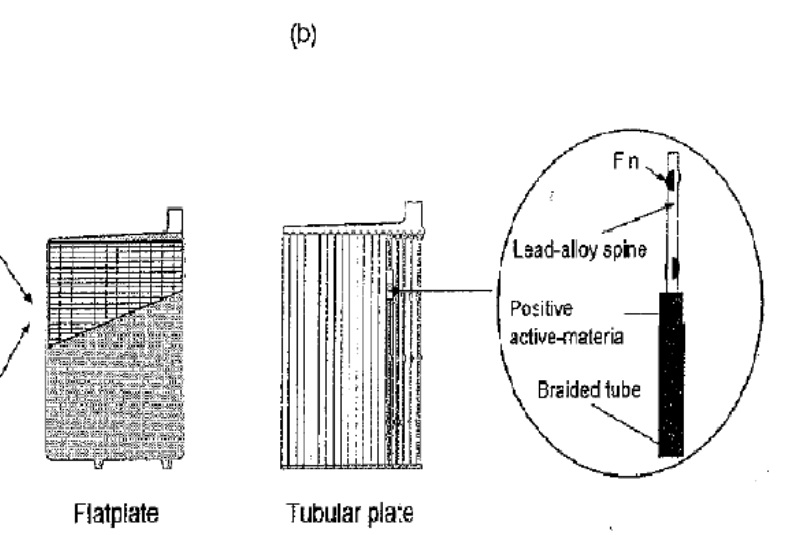
A tubular plate solved the problem. Instead of spreading the active material across a flat grid, manufacturers placed it inside narrow tubes surrounding lead spines. A fabric or similar porous covering held the material in position, while allowing the electrolyte to reach it.
The basic tubular design dates back to the late nineteenth century. One S C Currie is credited with developing an early form in 1881, although the design continued to evolve over many decades.
The Tubes Prevented Active Material From Falling Away
The major advantage was mechanical. The tubes helped prevent active material falling away during repeated cycling. This gave tubular positive plates a reputation for long service life, particularly in applications involving frequent charging and discharging.
Tubular plates thus became particularly useful in traction and stationary batteries. They were well suited to equipment that needed dependable energy storage over many cycles.
This Also Shows How Lead-Acid Technology Progressed
This development also shows how lead-acid technology progressed. The chemistry itself was already established. Much of the improvement came from engineering better ways to support, protect and use the active material.
Tubular Construction Became Another Important Step
Tubular construction was another important step in turning the lead-acid battery into durable industrial technology.
More Information
Lead Grids Changed the Lead-Acid Battery