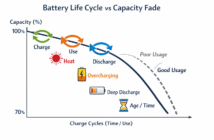
Nickel-cadmium batteries became famous for their durability, but they also developed a reputation for something less welcome. This was the nicad memory effect, a problem nobody expected.
The Problem Was Particularly In Applications
The nicad memory effect problem included applications where batteries were repeatedly discharged to roughly the same level before recharging. Over time, some nickel-cadmium batteries appeared to lose some usable capacity. They seemed to “remember” the point at which they had regularly been recharged.
The phenomenon was real, but the simple explanation that a battery literally remembered its previous discharge point was misleading. Changes in the battery’s internal chemistry and electrode structure could contribute to a voltage depression. Making the battery appear to run out of power sooner than expected.
The Problem Became Especially Noticeable When …
The problem became especially noticeable in equipment that depended on predictable battery performance. Users could find that a battery which had previously powered a device for a long period, now appeared to reach its low-voltage point much earlier.
This led to widespread advice about completely discharging nickel-cadmium batteries before recharging them. In some circumstances, controlled discharge cycles could help reduce voltage-depression effects. However, repeatedly forcing a battery into deep discharge was not always necessary and could itself contribute to wear.
The Memory Effect Therefore Became More Complicated
The memory effect therefore became more complicated than the popular description suggested.
Nevertheless, the issue mattered because nickel-cadmium batteries were becoming increasingly common in portable equipment. Millions of people were now handling rechargeable batteries themselves rather than leaving battery maintenance to engineers.
The memory effect became one of the first major rechargeable-battery problems experienced by ordinary consumers.
It Did Not Destroy The Nicad Battery’s Reputation.
However, this did not destroy the nickel-cadmium battery’s reputation. The chemistry remained extremely useful for demanding applications. But the problem encouraged researchers to look for better rechargeable technologies.
One of the most important answers would eventually be nickel-metal hydride, followed later by the much more influential arrival of lithium-ion batteries.
More Information