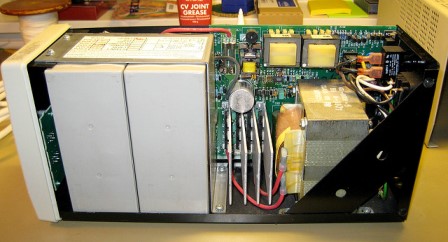
Lead-acid batteries have been around since 1859 when Gaston Planté invented them. They soldier on as senior citizens despite the advanced technology surrounding them. Why is that, you ask? It is because we have had time to perfect them. They are also remarkably cheap considering what they do. Sealed lead-acid batteries (SLA’s) still follow the original Planté principles although they are more refined.
The Grid Structure of Lead Acid Batteries

The silvery grid structure consists of lead. Well, not lead precisely, because pure lead is too soft and could collapse.
Accordingly, battery manufacturers harden the structure with additives that also improve electrical performance. The commonest are tin, antimony, selenium, and calcium. Then they add a sulfuric acid / water solution as electrolyte to complete the basic design.
What Makes Sealed Lead-Acid Batteries Different
Conventional lead-acid batteries steadily evaporate the water in the sulfuric acid solution through vents. They eventually die if we do not regularly top them up with battery water.
Engineers eliminated this maintenance chore by creating sealed lead-acid batteries.
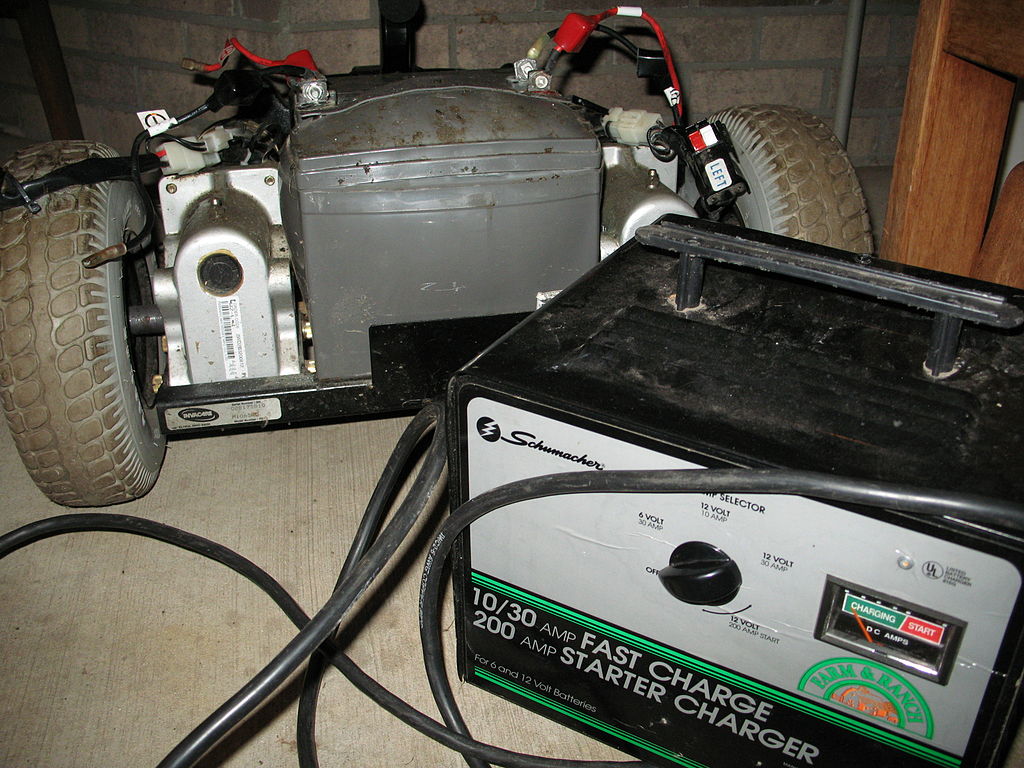
However, these are not actually completely sealed. Because they still need venting valves to release pressure from charging, and rapid discharging. The image to the left shows a SLA that ‘boiled over’ from overcharging.
However the real difference lies in the electrolyte. This is in liquid form in basic lead-acid batteries, while sealed lead-acid batteries use a semi-solid solution in a separator. This separator may be in the form of a soaked fiberglass mat. Alternatively, the manufacturer may add a silica gelling agent.
The Remarkable Success of Lead-Acid Batteries
Lead acid batteries continue to command over 40% of battery sales worldwide. They are good value for money, and they do their job without a fuss. While many sealed lead-acid batteries have simple jobs at automobile starters, others provide advanced support in hospitals and cellphone towers. Still more provide sterling service in home, alarm, recreational, medical, sports, and UPS applications. Just like the ones we advertise here on our website.
Related
How to Change Batteries …Elite Tennis Ball Machine
Secrets of Sealed Lead Acid Batteries
Preview Image: UPS Application