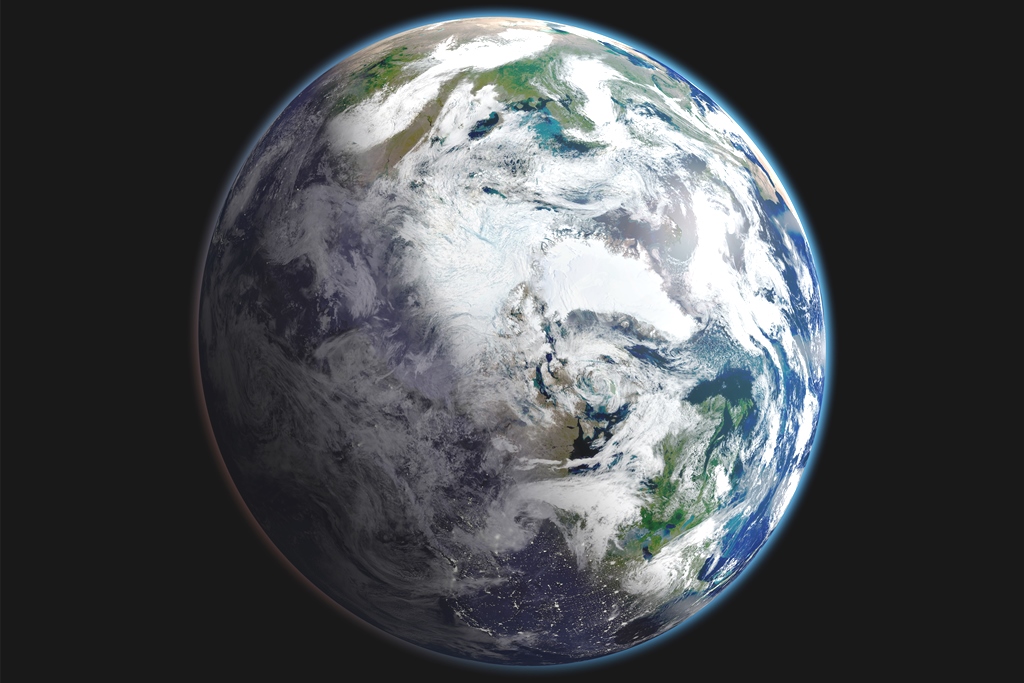
The Arctic ice pack reached its smallest extent previously recorded during the summer of 2012. Scientists had been noting seasonal changes since 1979 and the early days of satellites. They knew Arctic ice could shrink as much as 50% at the height of summer. However, they were concerned it was not recovering fully in winter.
Arctic Ice Concerns Include the Possibility of Irreversible Change
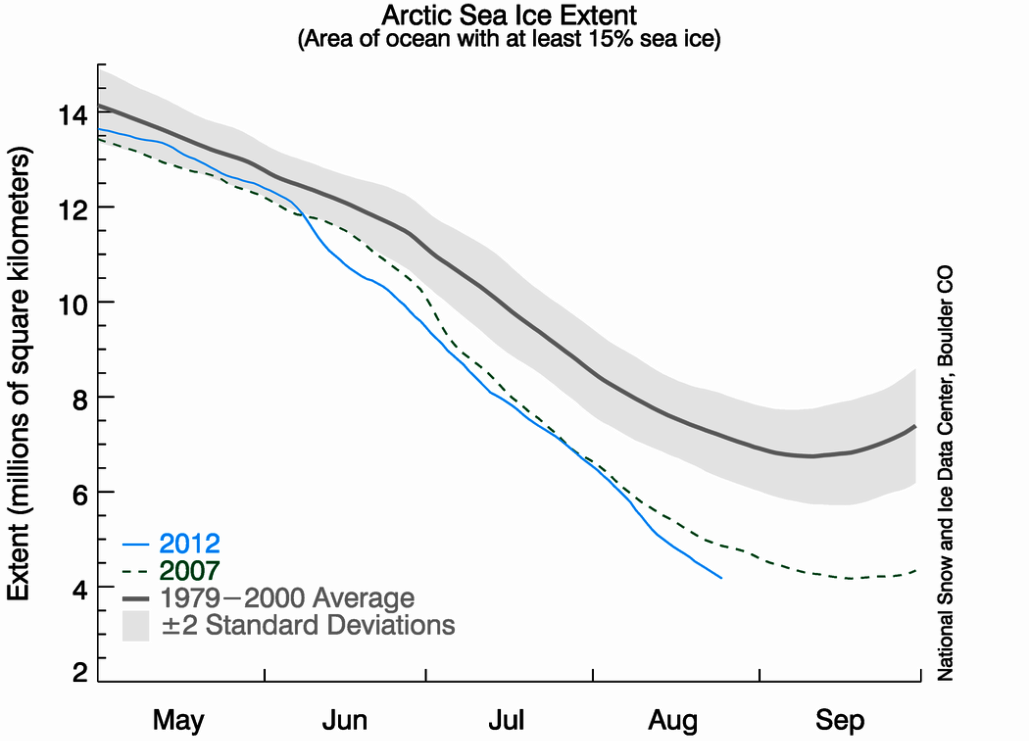
The Fourth Report of the UN Intergovernmental Panel on Climate Change considered the phenomenon comprehensively the previous year. It concluded greenhouse gases were largely, but not entirely forcing the gradual decline of the Arctic ice sheet.
This followed on from a 2007 study, warning the rate was faster than model simulations forecast. The 2012 IPCC report added that, “The region was at its warmest for at least 40,000 years. Moreover, the Arctic-wide melt season has lengthened at a rate of five days per decade.” A debate was developing what the tipping point would be for irreversible change.
The Longer Term Implications of Losing the Arctic Pack
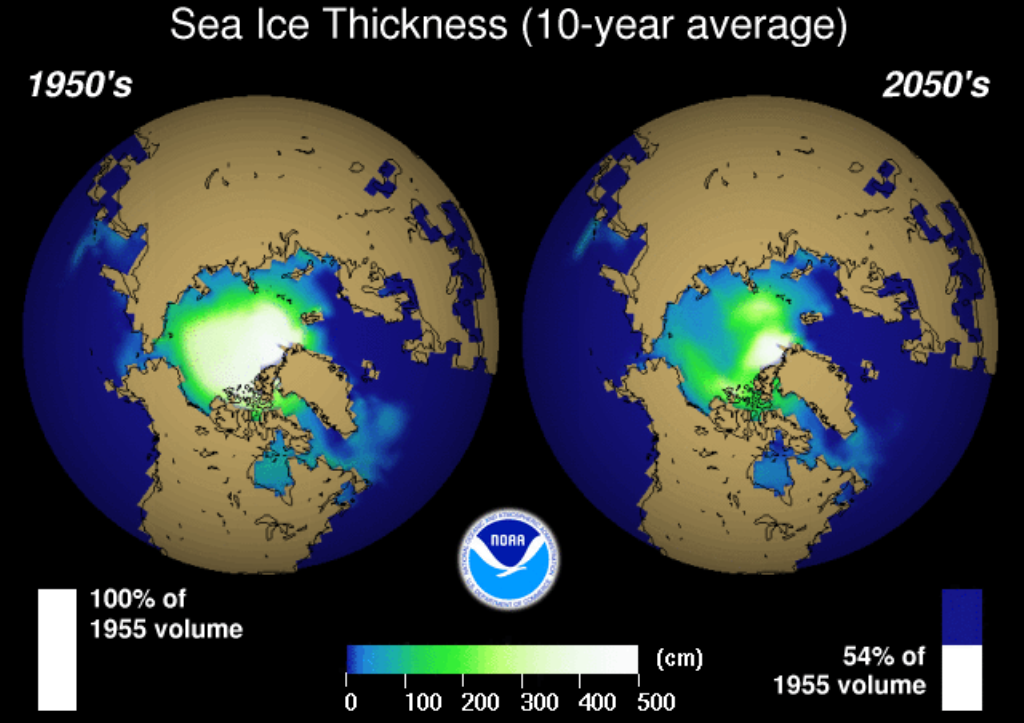
Sea ice has a cooling effect on ocean surface temperature, and by implication Earth’s atmosphere. When it melts, it releases molecular chlorine that depletes the tropospheric layer. Furthermore, sea ice decline increases methane emissions from Arctic tundra.
Other studies suggest reducing arctic ice could be causing wetter winters in Europe, and colder extremes in northern continents. They have also linked shrinking Arctic ice to forest decline in North America. The average size of polar bears is falling because they spend more time on land hunting. There are many more concerns as we fear rising sea levels.
National Geographic believes average sea level would rise by 216 feet, if all the polar and mountain ice melted. If we continue adding carbon to the atmosphere, it warns we will very likely create an ice-free planet. This would result in the average temperature rising from the current 58, to perhaps 80 degrees.
Related
How Does Carbon Reach the Atmosphere?
Climate Change Part 20: The IPCC’s Second Assessment 1996
Preview Image: September 2, 2012