A few years ago we might not have imagined artificial intelligence studying possible new battery materials to determine their potential. Extreme Mech has been digging around and discovered MIT engineers – and others in Russia and Singapore – are doing just that. AI’s quick brain comes in handy for scientists wanting to understand how a solid behaves at the nano scale when stretched.
Artificial Intelligence Studying Effects of Straining
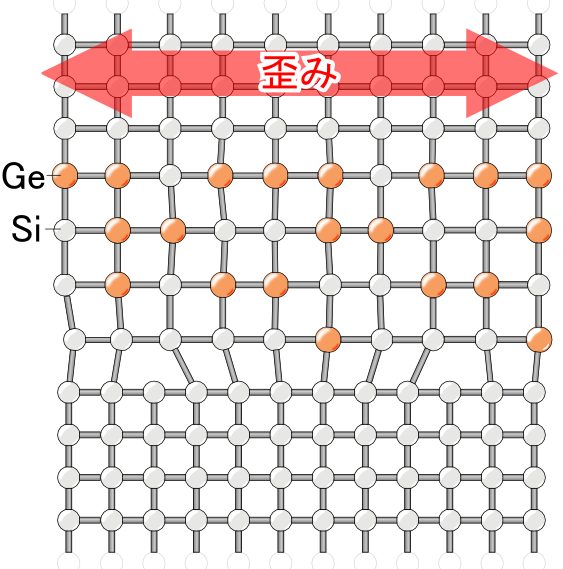
Stretch can be applied across all three dimensions in an in-and-out, or sideways direction, Extreme Tech explains. Thus we have six different strain types to consider, and these can be “in nearly infinite gradations of degree”.
Therefore the days of Thomas Edison making a thousand experiments to invent the light bulb may be gone forever. This is because battery storage is far too critical for alternative energy and global warming to explore by trial and error. Therefore, it may be time to say farewell to human creativity. And hi to artificial intelligence studying possible new battery materials to move the frontiers forward.

Straining materials to alter their performance is not a breaking news idea. Intel scientists used strained silicon to improve CPU performance in the Pentium 4 era between 2000 and 2008. However in the pre-artificial intelligence age they trusted on luck, but were successful in the end.
Recent studies have experimented with stretching chips by up to 7% and achieving remarkable things. If AI could pare down the millions of strain permutations to a few thousand, that would be a battery breakthrough. Wikipedia explains that stretching silicon atoms moves them further apart from each other.
This then reduces the atomic forces that interfere with the movement of electrons through transistors. Which is presumably why Intel 4 was faster than Intel 3. We wonder what value this straining will add for future batteries and their ions.
Related
Could Our Smartphone Batteries Read Our Minds?
Bendable Football Batteries: What’s Next?
Preview Image: Tug of War at the Highland Games in Stirling