Lithium batteries do not perform well as temperature falls as low as -70 Celsius. This makes them unsuitable for extreme cold regions of outer space. And indeed Earth’s coldest regions too. The problem lies in the composition of their electrodes and electrolytes. China researchers have created batteries that can get really cold by using organic, natural materials.
Lithium Battery Problems at Extreme Low Temperatures

When lithium batteries become cold, their conductivity plummets. As a result, electrochemical reactions at the interfaces between electrodes and electrolytes slow. Contracting materials also obstruct intercalation whereby electrodes exchange ions.
This phenomenon is common among many other conventional designs too. Hence, batteries that can get really cold are few and far between. Capacity generally falls below 50% at -20 Celsius temperature. If climate change continues unchecked, this could have major implications for electric cars, and alternative energies in extreme northern regions.
The Chinese Batteries That Can Get Really Cold
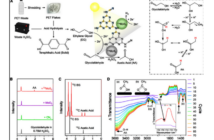
Researchers at University of Shanghai experimented with organic compounds for electrodes, until they found the right combination. Their chosen blend of polytriphenylamine cathode, and naphthalenetetracarboxylic anode does not require intercalation of ions

Hence ion exchange continues unabated even at -70 Celsius. Finally, we have created batteries that can get really cold. We can use them in polar regions, and the far reaches of outer space.
“Compared to the … electrode materials in conventional lithium-ion batteries, organic materials are abundant, inexpensive, and environmentally friendly,” Dr Yong-yao Xia says. Moreover, the price of the electrode material is about one third that of lithium-ion batteries.
The batteries are still at the experimental stage however, with specific energy per unit mass low compared to lithium-ion. Nonetheless, good progress has been made towards commercial batteries that can get really cold, so this is another development we consider well worth watching. Although it does run counter to China’s huge investment in lithium-ion technology.
Related
Battery Intercalation & How It Works
China is Racing Ahead with Batteries
Preview Image: Shanghai University