Saturn’s Titan is the second largest natural satellite in the solar system. It is also the only moon we know of with a dense atmosphere. Cassini presented NASA with 13 years of data before its sacrificial dive towards Saturn on September 15, 2017. Batteries will help search for signs of life on Titan when a NASA lander arrives there in 2034. Fifteen years away is a nano second in the life of our universe.
Why Batteries Will Help Search for Evidence of Life There
Batteries will help search for the origins of life on Saturn’s distant moon after blasting off from Earth in 2026. We could describe Titan as an almost-planet because it is larger than Sun’s smallest planet Mercury.
Moreover Titan is still relatively young with only a few impact craters scarring its generally smooth surface. There are however a few mountains and volcanoes erupting liquids and gases instead of molten rock. The climate produces winds and methane rainstorms. They have created dunes, rivers, lakes, and methane seas and deltas. NASA thinks it’s possible these circumstances could be a recipe for life.
The Dragonfly Mobile Robotic Rotorcraft Lander’s Mission
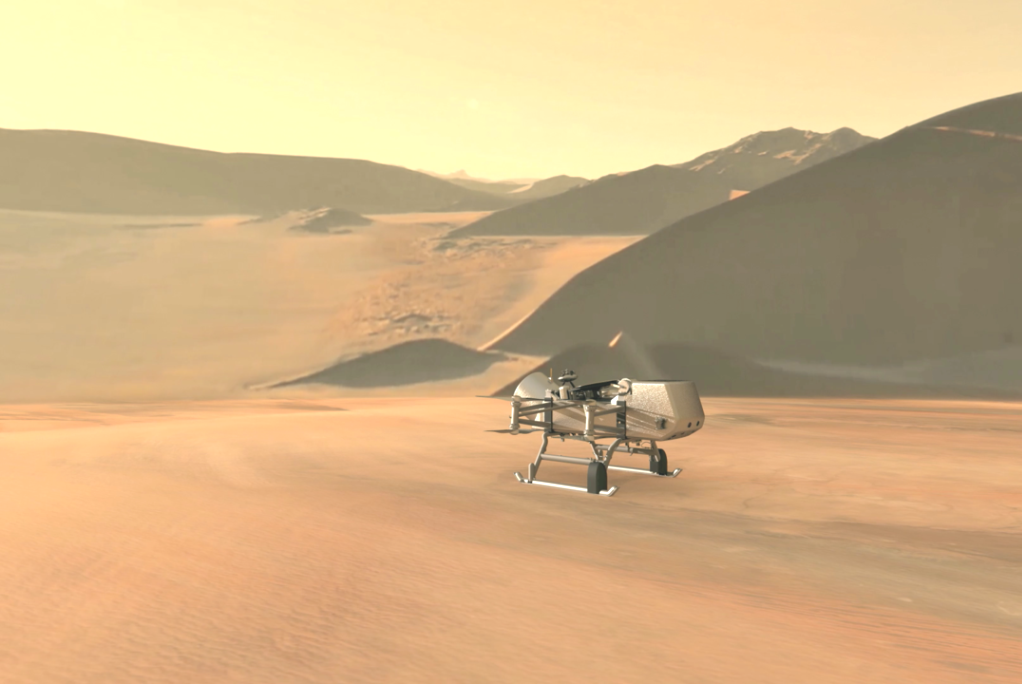
Batteries will help search for signs of life on Titan’s surface after Dragonfly lands. NASA believes this may have evolved from the carbon-rich surface, in interplay with its interior water ocean. The lander will obtain its power from batteries a multi-mission radioisotope thermo-electric generator will charge at night.
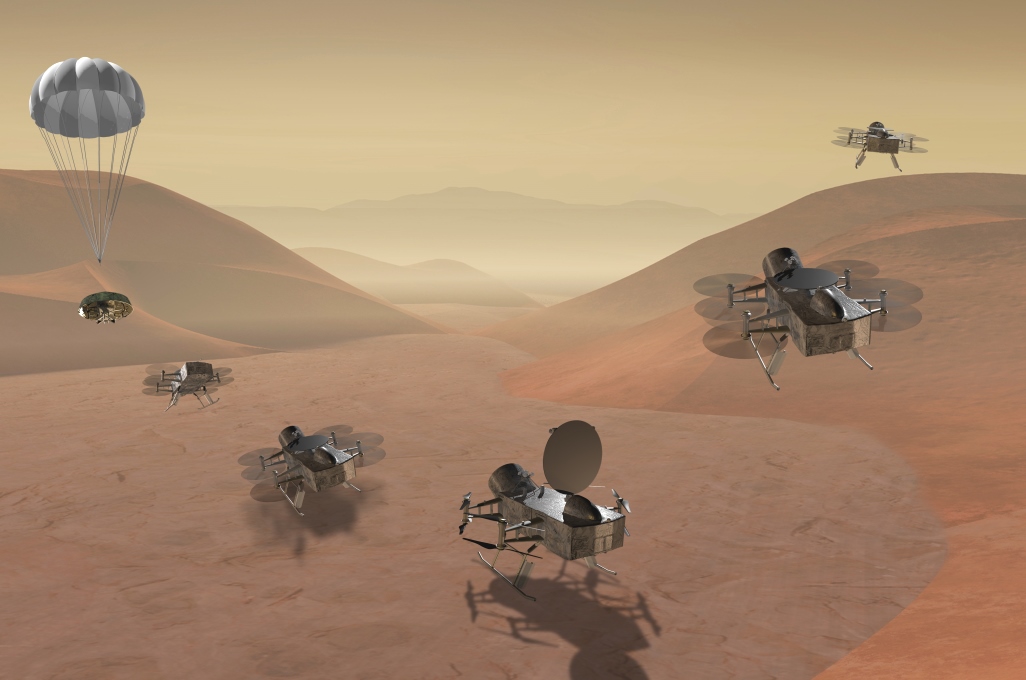
The eight-rotor Dragonfly will be a relatively small vehicle weighing in at approximately 1,000 pounds. It will visit the Shangri-La dune fields in 2034, similar to the Namib Desert.
The lander will then leap-frog up to five miles a hop, stopping by to take samples at interesting places. When Dragonfly reaches the Selk impact crater it will search for evidence of past liquid water. And molecules containing the recipe for life.
We pause to wonder what life will like on our own planet in 15 years time, as Dragonfly mission approaches Titan. Will we have nipped climate change in the bud by then do you think, or will the nations still be squabbling over what to do?
Related
The Radioisotope Batteries on Cassini Orbiter
Voyager 2 Thermonuclear Generator Triumph
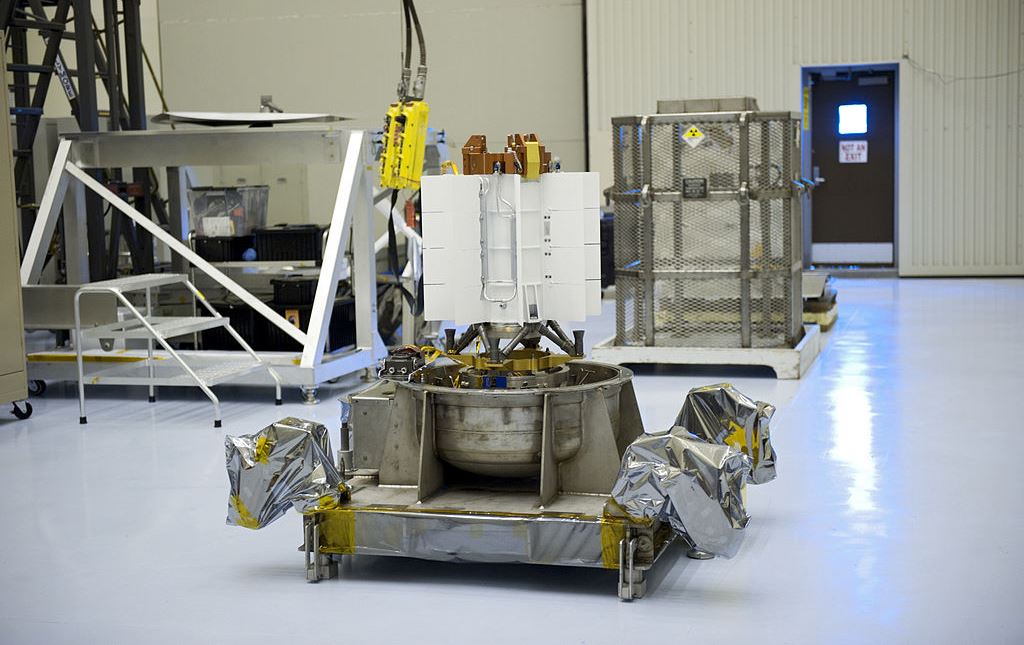
Preview Image: Radio Isotope Generator